The link between employee recognition and retention
%20(1).jpeg?width=40&height=40&name=Alex%20Powell-7746%20(Med)%20(1).jpeg)

In Australia’s tight labour market, employee retention has become one of the most pressing challenges for HR leaders. With skills shortages persisting and the cost of replacing an employee stretching well beyond their salary, organisations can’t afford to rely on reactive retention strategies. Increasingly, the difference between people staying or leaving comes down to a simple question: do they feel valued?
Employee recognition plays a direct and measurable role in retention. When recognition is inconsistent, delayed, or absent altogether, employees are far more likely to disengage and start looking elsewhere, even if their pay is competitive. On the other hand, regular, meaningful recognition reinforces why people stay: it signals that their contribution matters, that their effort is noticed, and that they have a future with the organisation.
For Australian workplaces navigating hybrid work, rising expectations, and shifting employee loyalty, recognition isn’t about grand gestures. It’s about building everyday moments of appreciation into the employee experience, in ways that are visible, timely, and genuinely felt. In this blog, we'll unpack the clear link between employee recognition and retention, and why organisations that get recognition right are better positioned to keep their best people, for longer.

What is employee recognition?
In the simplest terms, a culture of employee recognition in the workplace means that employees are likely to get thanked when they do good work. And it’s even more likely to have great work get noticed.
I was once working with a manufacturing company and one of the employees said it best:
“We want to be a place where you get noticed for getting it right, not just caught out when you get it wrong.”
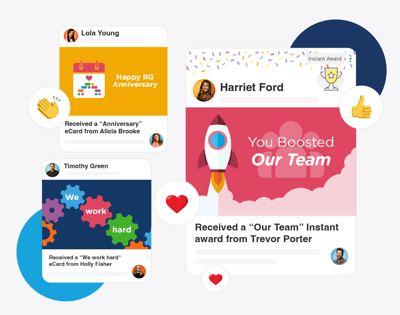
How that thanks happens can be varied and customised to fit the company; a shout-out in a meeting, a fellow employee sends you an eCard calling out the work you do that makes a difference, a small reward that gets sent digitally, or a larger reward that highlights those that have an important impact on the business and the team.
Discover the crucial recognition best practices you need to invest in this year with our latest webinar: Recognition Best Practices for 2026.
The costs of employee turnover and low retention rates
One thing we have seen as a trend for 2026 is the need to reduce unnecessary expenses to position organisations to be their most competitive. And often the cost of people dwarfs all other impacts on a company’s bottom line.
When we think about the cost of turnover, we can limit ourselves to just the cost of recruitment and onboarding, but that's not the whole picture. You have to factor in decreased productivity, team morale hits, lost intellectual property, and a range of other ripple effects. It's recommended that companies estimate 33% of an employee's salary as the financial impact of turnover. Check out our turnover calculator to get a sense of the impact turnover is having on your organisation.
How employee recognition impacts retention
Given the high cost of turnover, let’s further examine some of the ways that recognition actually impacts retention.

1. Builds loyalty
Recognition is one of the strongest drivers of employee loyalty because it signals that people’s contributions are truly valued. People want to be valued and they want to know that their work matters; 31% of Australian employees who have considered leaving their job cite a lack of recognition as a key reason. When employees feel consistently appreciated, they develop a stronger emotional connection to their organisation, their team, and their role; a connection that goes beyond pay or perks. This sense of being seen and valued fosters loyalty, making employees far more likely to stay, advocate for their workplace, and invest discretionary effort in their work. For Australian organisations navigating high turnover and competitive talent markets, embedding recognition into everyday culture isn’t just a “nice to have”, it’s a proven way to build lasting retention.
2. Increases engagement and motivation
Employee recognition is a powerful driver of engagement and motivation because it reinforces the behaviours and effort organisations want to see more of. When employees are recognised for their contribution, they gain clarity on what “good” looks like and feel encouraged to keep showing up with discretionary effort. This isn’t just anecdotal; our research found that recognition is the top driver of employee productivity, with 43% of employees saying that receiving recognition makes them feel more productive. Recognition fuels motivation by creating a positive feedback loop: effort is noticed, impact is acknowledged, and people feel inspired to go again. In Australian workplaces — particularly across hybrid and frontline environments — consistent recognition helps employees stay connected to their work and their organisation, strengthening day-to-day engagement and increasing the likelihood they’ll stay for the long term.
3. Creates a positive workplace culture
Recognition is a cornerstone of a positive working culture because it sets the tone for how people interact, collaborate, and appreciate each other every day. When appreciation is visible, timely, and authentic, it encourages a culture of respect, trust, and collaboration, where people are motivated to support one another and celebrate successes together. In contrast, workplaces where effort goes unnoticed often feel transactional, siloed, or demotivating, which can erode morale and increase turnover.
By embedding recognition into everyday practices, through managers, peers, and even small everyday moments, organisations create an environment where people feel seen, connected, and motivated. Want to learn more? Download our Employee Appreciation Workbook and try our thought starter exercises with your team!
4. Reduces burnout
 Burnout is one of the biggest silent drivers of employee turnover, and recognition plays a critical role in preventing it. When effort goes unnoticed, employees are more likely to feel that the extra hours, emotional labour and constant change simply aren’t worth it, a mindset that accelerates exhaustion and, ultimately, resignation.
Regular recognition acts as a powerful counterbalance to burnout by validating effort, not just outcomes. It helps employees feel seen during high-pressure periods, reinforces that their contribution has meaning, and creates moments of positive reinforcement that sustain energy over time.
In Australian workplaces, where lean teams and growing workloads are now the norm, recognition can be the difference between people pushing through a demanding season or burning out and leaving. By embedding recognition into everyday work, particularly through managers and peers, organisations can reduce burnout risk and, in turn, improve retention.
5. Improves job satisfaction
This impact was clearest to me during a week when I had a number of big deliverables to complete. I ended up working nights and weekends to meet deadlines and I was starting to feel overwhelmed and a bit victimised by my schedule.
At just this time, my boss sent me an eCard highlighting the visibility of how hard I was working and the impact my hard work would have on our mission to make the world a better place to work. In that moment, I felt my enthusiasm return. Being reminded of the impact of my work – and reminded that it was noticed – meant I was again happy to do that work – even in the evenings.
Examples of effective employee recognition programs
Often when I am talking to a company about improving recognition, they can get stuck on the details. “We know we want to make recognition better, but we don’t know how to do it.” The good news is that something is better than nothing, and progress is better than perfection, but here are some ways to invigorate recognition in your team or organisation.
Peer-to-peer recognition
Other employees are often more likely to know when an employee is going above and beyond regardless of where and when it happens. In our clients, the availability of peer-to-peer recognition doubles the amount of recognition that is sent. Especially with manager alerts in place to let them know when someone on the team has been recognised, peer-to-peer recognition is a big win for a small investment.
Milestone and service awards
In addition to performance-based recognition, milestone awards show appreciation for who people are and how long they have been at the company. While this shouldn’t be the only form of recognition people receive, it is an important way to demonstrate respect for the long-term efforts of employees.
Rewarding high performance
Increasingly employees are looking for a level of recognition above the day-to-day – a way to highlight when above and beyond work happens. Rewards – even in small amounts – can add that extra punch that gets employees’ attention and lets them know their work matters. Positive psychology studies have also found that giving rewards increases the happiness of the giver. Rewards are therefore a win for multiple reasons.
Recognition for everyday wins
While high impact actions are important to recognise, most employees are experiencing daily stressors and struggles that are best countered with small boosts throughout the week. Asking employees what they are proud of or holding one-on-ones on a regular basis will ensure that these simple everyday wins are highlighted to give employees the boost they need to keep going.
Tailored recognition
Even in the midst of organisation-wide recognition programs, managers and employees can help tailor the recognition specifically to the employee. Highlighting their specific actions, rather than making a general encouraging statement, is one way to make sure they feel seen. Managers should learn what types of recognition make a difference to employees (e.g., shout-outs at meetings, conversations during one-on-ones, candy left on their desk, etc.) and integrate that into their weekly plans.
Improve retention with Reward Gateway | Edenred employee recognition solutions
At Reward Gateway | Edenred, we love helping companies make recognition more powerful and consistent while also saving overworked administrators time. Do you have questions about your current program? Do you have ideas but aren’t sure how to implement them? Let us know. Our platform supports more than 8 million employees globally and integrates with all the leading HR Technology to create an employee experience you can be proud of.
Learn more about how Reward Gateway | Edenred can help you implement an employee experience platform and make your corner of the world a better place to work.