How recognition helps build employee adaptability in a changing world
Discover how recognition and rewards can boost employee adaptability and help your people embrace change with confidence in the age of AI.


As 2025 draws to a close, Australian and New Zealand workplaces are evolving faster than ever. From the rise of AI to shifting employee expectations, organisations are navigating a new era of constant transformation.
But while change promises innovation and efficiency, it also brings uncertainty. Many employees feel overwhelmed by the pace of technological and cultural change, and that’s putting engagement, morale, and productivity at risk.
Our latest research, Adaptability in a Changing World: How Recognition and Rewards Empower Employees to Embrace Change, reveals a clear message for HR leaders: recognition isn’t just about appreciation — it’s a powerful driver of employee adaptability.
Why employee adaptability matters now
Adaptability has become a defining skill in modern workplaces. Deloitte found that 63% of Australian organisations are increasing their investment in AI, with 71% expecting productivity gains as a result. Meanwhile, PwC reports that productivity growth has quadrupled in industries effectively using AI.
Yet many employees don’t feel ready for this shift. Only 36% of workers say they have the skills to use AI effectively (KPMG), and in our survey of 250 HR leaders, just 7% said their employees are “very confident” adapting to new tools or systems.
30% of HR leaders believe their employees aren’t prepared for AI-driven business transformation.
This adaptability gap could have significant ripple effects. While 98% of HR leaders agree that adaptability influences engagement and performance, only 12% say their people are excellent at embracing change.
How recognition drives employee adaptability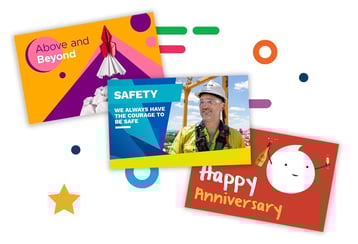
Recognition helps reframe change from something to be feared into an opportunity for growth, reinforcing that adaptability itself is a valued skill.
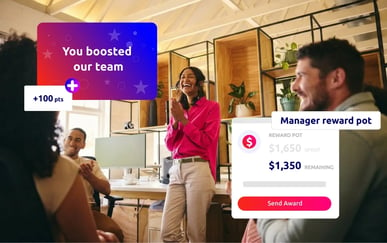
In our research, 87% of HR leaders reported having peer or manager-led recognition programs, and 62% said they recognise adaptability traits in their programs.
68% of HR leaders encourage managers to recognise adaptability in their teams.
However, only 21% have a formal award tied to adaptability, just 2% have it embedded in their organisational values. Additionally, only 18% state that their recognition program strongly encourages employees to experiment with new ideas, even if they may fail.
That’s a missed opportunity. Recognition that celebrates progress over perfection helps employees see that growth, experimentation, and adaptability are valued — not just flawless results. It builds the confidence to learn, take risks, and innovate.
How HR can strengthen employee adaptability
As transformation accelerates, HR plays a pivotal role in shaping how employees experience change. Four key actions can help build a more adaptable workforce:
-
Recognise and reward adaptive behaviour: Celebrate resilience, innovation, and continuous learning to make adaptability part of your culture.
-
Prioritise transparent communication: Use always-on communication channels to keep employees informed, supported, and emotionally secure.
-
Empower development and growth: Invest in both formal and informal learning opportunities that boost skills confidence.
-
Focus on wellbeing and psychological safety: Employees who feel safe and supported can adapt with greater ease.
“Recognition helps employees feel seen and supported and that’s the foundation of adaptability.”
Want to learn more about employee adaptability in an AI-driven age? Download our latest research report: Adaptability in a Changing World: How Recognition and Rewards Empower Employees to Embrace Change.
Ready to create a platform your people will love? Whether you’re starting fresh or levelling up an existing program, Reward Gateway | Edenred makes it easy to connect your people to the things that matter, all in one place.