





%20(1).jpeg) Alexandra Powell
Alexandra Powell

Our research has increasingly found that Generation Z – while still focused on pay – has higher expectations of the workforce. They expect the company to support work-life balance, to care about their wellbeing, and to create opportunities for frequent, consistent recognition. In fact, 68% of employees say recognition is the same or better than a 10% pay raise – with those numbers higher in Millennials (77%) and in Gen Z (79%). And almost 1 in 5 of those looking for a new employer cite a lack of recognition as the cause.
What is employee recognition?
In the simplest terms, a culture of employee recognition in the workplace means that employees are likely to get thanked when they do good work. And it’s even more likely to have great work get noticed.
I was once working with a manufacturing company and one of the employees said it best:
“We want to be a place where you get noticed for getting it right, not just caught out when you get it wrong.”
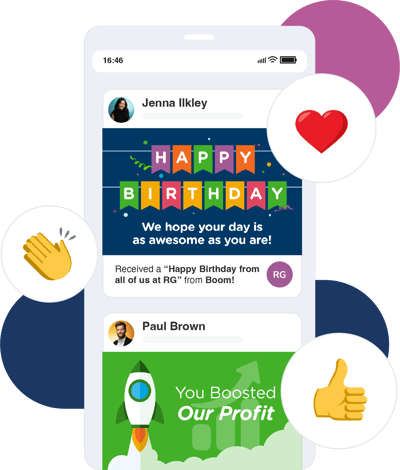
How that thanks happens can be varied and customized to fit the company – a shout-out in a meeting, a fellow employee send you an eCard calling out the work you do that makes a difference, a small reward that gets sent within days of great work, or a larger reward that highlights those that have an important impact on the business and the team.

The costs of employee turnover and low retention rates
One thing we have seen as a trend for 2026 is the need to reduce unnecessary expenses to position organizations to be their most competitive. And often the cost of people dwarfs all other impacts on a company’s bottom line. When we think about the cost of turnover, we can limit ourselves to just the cost of recruitment, onboarding, etc. But when the Work Institute considers the true cost of turnover to the organization – they have learned to factor in lost productivity, drop in team morale, lost intellectual property and recommend companies estimate 33% of salary as an estimate of the financial impact turnover has on the business. Check out our turnover calculator to get a sense of the impact turnover is having in your organization.
How employee recognition impacts retention
Given the high cost of turnover, let’s further examine some of the ways that recognition actually impacts retention.

1. Builds loyalty
People want to be needed and know their work matters. When good work gets noticed, 78% of employees say it makes it more likely they will stay.
2. Increases engagement and motivation
Cornell research found that a small reward after completing a task well increased people’s interest and engagement in the task and made it more likely they would repeat valuable behaviors. We found that the percentage of employees willing to go above and beyond at work is 36% higher in cultures where recognition is excellent vs those where recognition is lacking.
3. Creates a positive workplace culture
This one seems pretty intuitive, and the best example of how effective recognition is on culture came from an operating room nurse. She shared that surgeries could be stressful, and it wasn’t uncommon for surgeons to yell to make work happen quickly. She shared, “I understand why they yell; if they’d just say, ‘Thank you’ at the end, I’d bounce back quickly and be ready for the next surgery.”
4. Reduces burnout
 In our Workplace Wellbeing report, we shared that 69% of employees said their workplace wellbeing would improve if they were just thanked more, and that environments with good or excellent recognition showed a 30% reduction in the number of employees feeling frequently stressed than those with poor recognition. If we are working hard, and we know people care, it lightens the load.
5. Improves job satisfaction
This impact was clearest to me during a week when I had a number of big deliverables to complete. I ended up working nights and weekends to meet deadline and was starting to feel overwhelmed and a bit victimized by my schedule.
At just this time, my boss send me an eCard highlighting the visibility of how hard I was working and the impact my hard work would have on our mission to make the world a better place to work. In that moment, I felt my enthusiasm return. Being reminded of the impact of my work – and reminded that it was noticed – meant I was again happy to do that work – even in the evenings.
Examples of effective employee recognition programs
Often when I am talking to a company about improving recognition, they can get stuck on the details. “We know we want to make recognition better, but we don’t know how to do it.” The good news is that something is better than nothing, and progress is better than perfection, but here are some ways to invigorate recognition in your team or organization.
Peer-to-peer recognition
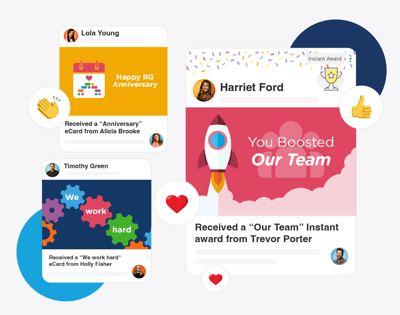
Other employees are often more likely to know when an employee is going above and beyond regardless of where and when it happens. In our clients, the availability of peer-to-peer recognition doubles the amount of recognition that is sent. Especially with manager alerts in place to let them know when someone on the team has been recognized, peer-to-peer recognition is a big win for a small investment.
Milestone and service awards
In addition to performance-based recognition, milestone awards show appreciation for who people are and how long they have been at the company. While this shouldn’t be the only form of recognition people receive, it is an important way to demonstrate respect for the long-term efforts of employees.
Rewarding high performance
Increasingly employees are looking for a level of recognition above the day-to-day – a way to highlight when above and beyond work happens. Rewards – even in small amounts – can add that extra punch that gets employees’ attention and lets them know their work matters. Positive psychology studies have also found that giving rewards increases the happiness of the giver. Rewards are therefore a win for multiple reasons.
Recognition for everyday wins
While high impact actions are important to recognize, most employees are experiencing daily stressors and struggles that are best countered with small boosts throughout the week. Asking employees what they are proud of or holding one-on-ones on a regular basis will ensure that these simple everyday wins are highlighted to give employees the boost they need to keep going.
Tailored recognition
Even in the midst of organization-wide recognition programs, managers and employees can help tailor the recognition specifically to the employee. Highlighting their specific actions, rather than making a general encouraging statement, is one way to make sure they feel seen. Managers should learn what types of recognition make a difference to employees (e.g., shout-outs at meetings, conversations during one-on-ones, candy left on their desk, etc.) and integrate that into their weekly plans.
Improve retention with Reward Gateway | Edenred employee recognition solutions
At Reward Gateway | Edenred, we love helping companies make recognition more powerful and consistent while also saving overworked administrators time. Do you have questions about your current program? Do you have ideas but aren’t sure how to implement them? Let us know. Our platform supports more than 8 million employees globally and integrates with all the leading HR Technology to create an employee experience you can be proud of.
Learn more about how Reward Gateway | Edenred can help you implement an employee experience platform and make your corner of the world a better place to work.
