5 HR tactics to support employees through cost-of-living challenges in Australia


As fuel, grocery and housing costs continue to climb, Australian employees are feeling the pressure. HR can’t solve inflation, but you can reduce harm, protect productivity and help people access meaningful cost-of-living support at work.
The most effective approach blends compliance, compassion and clear communication. Below are five tactics HR teams can implement now: treating cost-of-living stress as a psychosocial hazard, equipping managers for tough money conversations, making Total Rewards crystal clear, watching out for leading indicators of financial strain, and building feedback loops that direct benefits where they matter most.
1. Treat cost-of-living stress as a psychosocial hazard
In Australia, psychosocial hazards sit squarely within Work Health and Safety (WHS) duties. Financial stress is a credible psychosocial risk because it can increase anxiety, fatigue, distraction, and interpersonal conflict, factors that could undermine safety and performance. Addressing cost-of-living pressures is therefore both a mental wellbeing and a financial wellbeing priority.
Begin by recognising the hazard formally. Add cost-of-living stress to your psychosocial risk register and consult workers through Health and Safety Committees, Health and Safety Representatives, unions, and targeted listening. Ask where and how rising costs are affecting different roles, sites, and cohorts. Assess the likelihood and consequence of harm, paying particular attention to groups at higher exposure, such as lower‑paid employees, shift-based teams, or people with long commutes.
Control the risk using a hierarchy-of-controls mindset. Primary controls may include job design interventions that increase predictability (so people can budget), hybrid or compressed schedules that reduce commute frequency, and safe, practical transport support.
Secondary controls might include adding financial counselling to your EAP, providing financial wellbeing resources and education, signposting employees to reputable external help such as ASIC Moneysmart and the National Debt Helpline, and training managers to have safe, boundary-aware conversations. Tertiary controls could include crisis leave or rapid referrals for acute distress.
Document how you identified the hazard, the consultation you undertook, the controls you chose, and the way you’ll review their effectiveness. Train leaders on psychosocial obligations and on the limits of their role, they are not financial advisers but they can direct people to help and support. Keep privacy at the forefront: collect only the data you need, de-identify wherever possible, and explain clearly how any information will be used. This is general information, not legal advice; refer to Safe Work Australia guidance and your regulator for jurisdiction-specific requirements.
2. Give managers the words, and the guardrails, for tough money conversations
Most employees will raise money concerns with their direct manager first. If those managers feel unprepared, conversations can be awkward or even risky. Your goal is to help managers listen, reduce harm, and connect people to appropriate support while staying squarely within their remit.
Provide a simple conversation framework and model language. Managers can open with observation and empathy: “I’ve noticed you’ve seemed under a lot of pressure lately and I wanted to check in.” They can invite a conversation without prying: “If anything outside work is affecting you here, and you want to talk about it, I’m here.” They should set clear boundaries: “I can’t give financial advice, but I can explain what support we have and connect you with people who can help.” They can then offer specific pathways: “We have financial counselling available through our EAP, and these government resources are trustworthy. We can also look at work-related adjustments that might help, like flexible rosters or additional shifts.” Close with clarity and care: “Let’s touch base next week. If anything changes sooner, please reach out.”
FREE WORKBOOK: How to Empower Mangers to Drive HR Impact in 2026
Prepare managers for common scenarios. If someone asks for more hours, a manager might say, “I can explore extra shifts and let you know what’s possible. In the meantime, have you seen our discounts program that can help with reducing fuel and grocery costs?” For pay concerns, they might respond, “I can walk you through your current pay and allowances, and how to raise any issues with payroll. For budgeting or debt questions, our EAP can help.” For overtime fatigue, they can acknowledge risk: “Your wellbeing matters. Let’s look at workload and roster options that can help.”
Give managers a clear “what I can and can’t do” guide. Spell out decisions they can make locally, like flexing rosters, explaining benefits, and making referrals, versus issues that need HR, payroll, or legal input. Make referral pathways simple and fast with a single page of contacts for EAP and financial counselling, hardship policies, leave options, and emergency escalation.
Treat this as capability building, not a one-off memo. Run short briefings, offer role-play practice, and track effectiveness through manager confidence ratings, the volume and outcomes of referrals, and employee feedback on psychological safety. The aim is not to turn managers into counsellors; it's to equip them to have humane, compliant conversations that get people the right help.
3. Make Total Rewards visible (without spin) so benefits actually get used
When money is tight, employees tend to focus on base pay and overlook the broader value of their Total Rewards package. To deliver real cost-of-living support for employees, you need to make your entire Employee Value Proposition tangible and easy to use, especially benefits that reduce day-to-day expenses.
FREE ON-DEMAND WEBINAR: The New Pay Reality: Total Rewards Beyond Raises
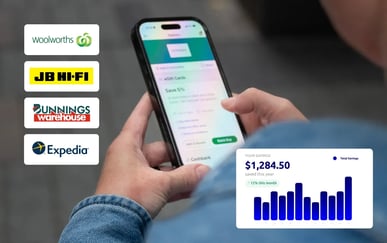
Start by issuing personalised Total Reward statements at least annually and after key life events, like returning from parental leave. Present base pay, superannuation, loadings and allowances, leave entitlements, employer-paid insurance, and the after-tax value of benefits such as transport subsidies, novated leasing, discount programs, or subsidised meals. Translate benefits into real-world savings so your people understand what's actually going back into their pockets. For example, show that regularly using the supermarket eGift card program could save a typical household a certain percentage or amount each month, like below:

Reduce friction everywhere. Host benefits information in one hub with easy-to-understand summaries, eligibility rules, simple “how to claim” steps, and quick calculators where useful. Enable single sign-on and mobile access. Promote benefits at the moments they matter most: transport support for shift workers, childcare subsidy updates for parents, or energy rebates information ahead of winter bills. Invite feedback on which benefits feel genuinely helpful and retire the ones that don’t land so you can reinvest in what people value.
Measure awareness and usage. Look for increases in unique users, repeat participation, and self-reported savings. Share stories carefully and respectfully, never shaming or oversharing, to help colleagues see how others are making the most of what’s available. Want to hear a great success story? Check out our Covalent Lithium case study.
4. Watch for leading indicators of financial strain, then act
You don’t need intrusive data collection to see early signs of financial strain. The combination of a few operational signals and frontline insight can help you intervene before issues become attrition or safety incidents.
Track trends in unplanned absences and lateness by team and site, because transport and caring costs often show up there first. Monitor overtime reliance and multiple-shift stacking, particularly where fatigue or safety risk is rising. Look at high-level EAP utilisation and wait times if available, without accessing confidential details. Notice increases in pay correction queries, requests for extra shifts, and hardship requests. Keep an eye on turnover risk signals, such as exit interview mentions of pay or commute costs.
Agree on a light-touch response playbook so managers and HR know what to do when something spikes. For instance, if unplanned absences exceeds an agreed threshold for two months in a particular site, you might plan a manager-led check-in, refresh communication about cost-of-living support, review rosters, and test a local transport solution or parking subsidy. Build governance into the process: review indicators monthly, consult before introducing changes, and ensure anti-discrimination and privacy safeguards are in place. Pair these quantitative signals with qualitative insights from managers, union representatives, and employee forums. Your goal is not surveillance; it's to solve practical problems early so people aren’t tempted away by employers with clearer value or better day-to-day relief.
5. Build feedback loops and heatmaps to target cost-of-living support where it matters
Listening at scale can be short, respectful, and effective. A regular pulse survey can uncover where cost pressures bite, which supports people value, and how needs differ by site and role.
 Design a monthly pulse survey with three to five questions that people can answer in under two minutes. Ask how rising costs are affecting their ability to work safely and productively on a simple scale. Offer a multiple-choice list so people can indicate which costs are biting most, transport, food, housing, childcare, health or other, and invite one open-text suggestion about what would help the most right now. Consider optional questions about suburb or postcode and role type to enable heatmapping, but keep responses anonymous or de-identified and explain exactly how you’ll use and store the data.
Complement the pulse with targeted listening opportunities. Host short focus groups with frontline teams on different shift times, meet regularly with health and safety representatives and union delegates, and hold manager roundtables to gather what they’re seeing and hearing. Maintain always-on channels such as a monitored email for employee queries, QR-code suggestion boxes, and quick intranet polls.
Turn the insights into action by visualising hotspots. Create a simple heatmap by site, role, and roster type that combines pulse scores with operational indicators like absence or turnover. Where a hotspot appears, pilot a tailored solution for eight to 12 weeks, whether that’s carpool coordination, secure bike storage, onsite pantry staples, discounts on everyday costs, or better alignment of shift times with public transport. Measure uptake and impact, iterate quickly, and scale what works. Close the loop with “you said, we did” updates so employees see that it’s worth speaking up. Embed cost-of-living insights as a standing item in HR and leadership meetings and include them in your psychosocial risk reviews.
Cost-of-living support for employees: Where to start in 2026
If you need a practical starting point, begin by adding cost-of-living stress to your psychosocial risk register and running a short pulse to identify hotspots. In the same month, deliver a 60‑minute manager briefing with a one-page script guide and a clear referral pathway to EAP and financial counselling.
Refresh your benefits hub and send targeted communications about the two most valuable cost savers for your workforce. Choose one high-impact site to pilot a local relief initiative, define simple measures of success, and commit to a 90-day review. These moves establish a rhythm of listening, action, and learning that you can build on.
Done well, these five tactics reinforce each other. You’ll meet your WHS obligations around psychosocial risk, equip managers to respond with care and clarity, make your existing benefits work harder, catch issues early, and direct limited resources to where they have the greatest impact. Most importantly, your people will feel seen and supported through a period of uncertainty when that matters more than ever.
Want to learn more about offering cost-of-living relief to your people and boosting their financial wellbeing? Access our Cost of Living content hub for a range of free, helpful resources.
To learn more about our Employee Engagement Platform and how it can support your people during times of uncertainty and change, schedule a free consultation with one of our experts.