Navigating interest rate rises: How to ease financial pressure for your people


Australia’s latest interest rate rise has pushed the cash rate to around 4.1%, and the ripple effects are everywhere. For households with variable mortgages, that can mean roughly $2,800 more in annual repayments on top of broader cost-of-living pressures. For employers, the impact shows up as a quieter (and sometimes louder) refrain from people whose pay simply isn’t stretching as far as it did even a year ago.
This is more than a budgeting problem at home. It’s a workplace problem. When everyday essentials cost more, employees feel stressed, reduce discretionary spending, and start looking for income boosts, often by switching jobs for a modest pay increase.
HR and finance leaders are caught between empathy for their people and the very real constraints of operating costs. If rising interest rates are effectively reducing take-home pay, the question isn’t “should we invest in salary increases ?” It’s “how else are we going to give that money back without blowing out our cost base?”
Reframe discounts as a financial wellbeing strategy, not a perk
As of 17 March 2026, the Reserve Bank of Australia lifted the cash rate by 25 basis points to 4.10%. For a $1 million variable mortgage, that 0.25 percentage point hike alone can add at least $150 to monthly repayments, on top of existing pressures from higher grocery and utility bills.
At the same time, recent reporting highlights elevated petrol prices driven by higher global oil benchmarks and widened retail margins, keeping fuel pump prices stubbornly high and further squeezing household budgets.
Against this backdrop, it’s time to reposition “discounts” from a nice-to-have perk to a core financial wellbeing strategy that gives employees more control over their biggest cost drivers, not just their daily checkout.
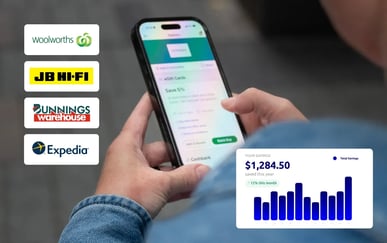
- Big-ticket relief: Offer guided access to refinance options (with available cashback incentives) to help eligible employees reduce mortgage costs over the life of their loan; curated deals to switch energy and telco providers; and negotiated, discounted rates on private health insurance. These levers target the bills that move the needle most each month.
- Everyday savings that compound: Pair those big-ticket levers with always-on savings across groceries, fuel, and essential retail so employees see and feel value every week.
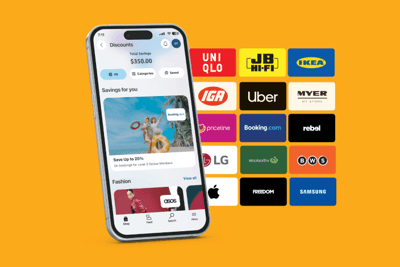
- Small cost, large impact: Investing a portion of your Total Rewards budget into a high-utility discounts marketplace (e.g. via a partner like Reward Gateway | Edenred) delivers a meaningful boost to effective take-home pay at a fraction of the cost, and none of the ongoing payroll load, of a blanket salary increase.
The result is a practical, equitable way to ease financial pressure during a high-rate cycle: employees get real tools to tackle mortgages, utilities, insurance, and the weekly shop; while employers gain a predictable, scalable intervention that improves financial wellbeing, engagement, and retention without inflating fixed costs.
FREE WEBINAR: The New Pay Reality: Total Rewards Beyond Raises
Protect morale and retention in a tightening market
Higher rates compress discretionary income, which pushes many people to cut spending and juggle bills. Financial stress can erode morale, distract focus, and dampen engagement. In that context, taking practical steps to ease cost-of-living pressure acts as a stabilisation lever for your workforce. It signals that you understand the squeeze, and it gives people a sense of agency over their weekly expenses.
 There’s also a clear retention dimension. When money is tight, even a small pay bump elsewhere can look compelling. Replacing people is costly in both dollars and momentum, and current operating conditions mean budgets are under scrutiny.
A robust employee discounts program is a low-cost, high-visibility hedge against undesirable attrition: savings show up daily in ways employees can feel, which strengthens attachment to your brand and reduces the temptation to move for marginal gains. By directly supporting basic financial security needs, you reduce a key trigger of flight risk while reinforcing your reputation as an employer that shows up when it counts.
Create always-on engagement and amplify other people strategies
A one-off pay rise can fade quickly in perception. An always-on discounts program, by contrast, creates repeated micro-wins: a percentage off the weekly shop, dollars saved at the pump, a more affordable school uniform or birthday gift. These small moments compound into a steady drumbeat of value that supports engagement year-round.
Crucially, the invitation to save is fair and equitable across your workforce, regardless of age, life stage, or family makeup, so the benefit resonates from early-career employees feeling rent stress to parents watching grocery bills climb. Over time, those everyday interactions build goodwill and trust and contribute to compounding employer brand impact through consistent, lived experience.
And it’s not just about savings. Benefits like discounts can be a proven lever to enhance overall employee engagement by acting as the “secret sauce” for program adoption.
When discounts are integrated into your benefits hub, they give employees a compelling reason to return frequently, which boosts visibility and uptake of other initiatives such as employee recognition, wellbeing programs and internal communications.
High utilisation of the discounts platform translates into frequent, positive touchpoints with your brand and messages, magnifying the reach and effectiveness of your broader people strategy.
How to make it work
You don’t need a massive transformation to deliver meaningful relief. Focus on a few execution principles to maximise impact quickly:
- Start with essentials: Prioritise categories where employees feel inflation the most; groceries, fuel, and key retailers. That’s where the “this makes a difference” moments happen.
- Make access effortless: Provide a mobile-friendly experience, simple sign-on, and clear instructions. The easier it is to save, the more people will use it.
- Communicate like a campaign: Treat the rollout like a product launch with teasers, launch moments, manager toolkits, and ongoing reminders tied to seasons and events.
- Celebrate real stories: Share examples of weekly savings or how someone offset a bill. Stories make the benefit tangible and encourage peer-to-peer adoption.
- Measure and iterate: Track utilisation, total dollars saved, and category trends. Use the data to refine offers, spot gaps, and report impact back to leaders.
- Include everyone: Ensure part-time, casual, and remote workers can access and benefit, from frontline teams to corporate staff, to maximise fairness and ROI.
The takeaway for HR and finance leaders
In a tightening market, financial wellbeing is foundational. People can’t bring their best when they’re worried about the basics. While wage decisions will always be part of the equation, there’s immediate value in tools that stretch take-home pay without locking in higher fixed costs. That’s why many HR and CFO leaders are reframing employee discounts from a perk to a core element of their people strategy.
Interest rates may be outside your control, but how supported your people feel is not. With a proven partner like Reward Gateway | Edenred, you can deploy a discounts program that delivers daily, visible value, eases cost-of-living stress, and serves as a backbone for your broader recognition, wellbeing and communications initiatives. Help employees win the small moments that add up, at the checkout, at the fuel pump, and in their household budgets, and you’ll build loyalty that lasts.
Speak with one of our employee engagement experts today to find out how we can help you in driving employee engagement, productivity, and retention in a competitive market.