




%20(1).jpeg) Alexandra Powell
Alexandra Powell
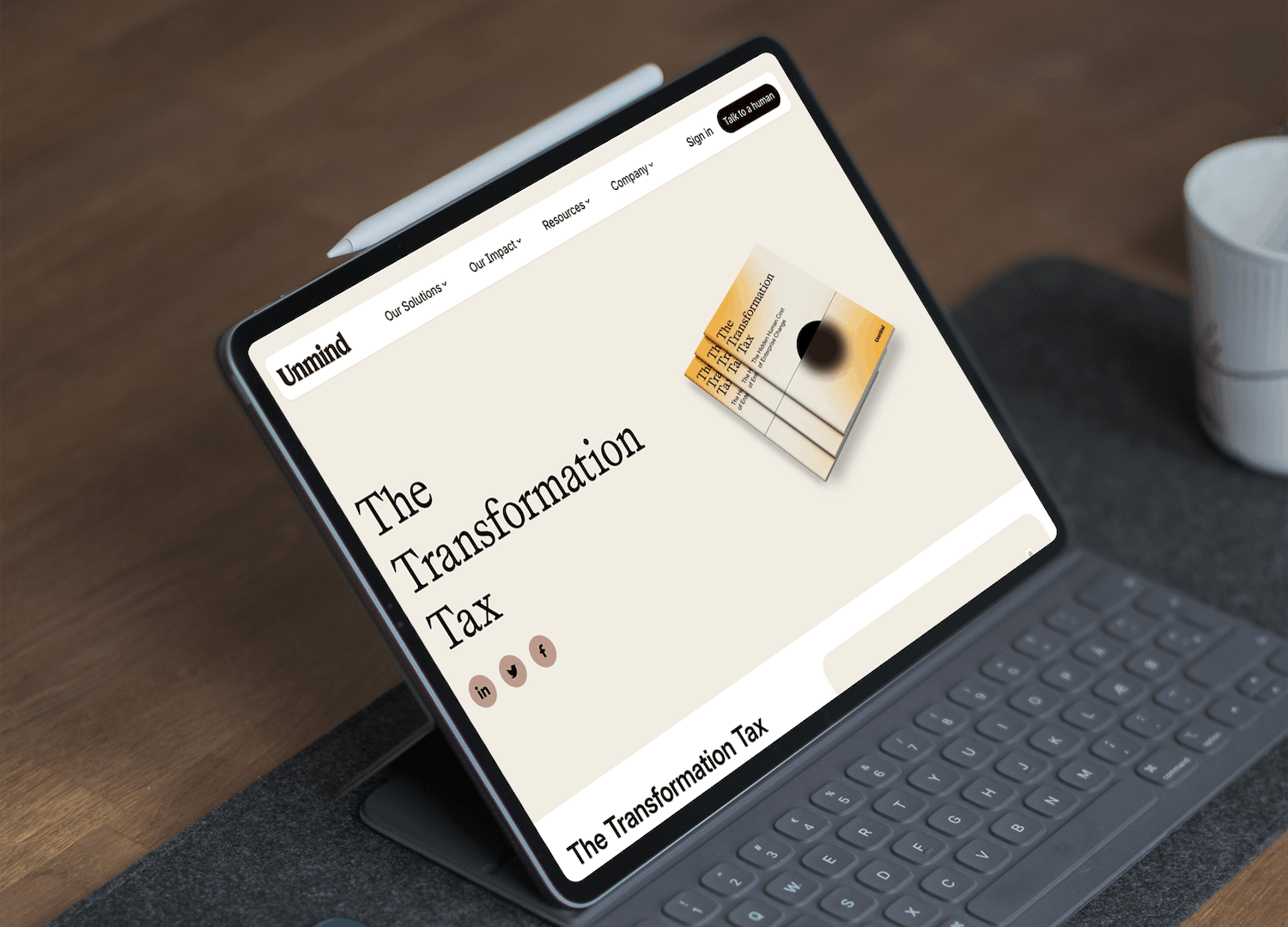
We’re proud to partner with Unmind to spotlight a timely new report: Transformation Tax: The Hidden Human Cost of Enterprise Change. The headline? Change isn’t a project anymore – it’s a permanent state, and it’s taking a real toll on people if we don’t manage it with care.
Unmind’s latest brings together CHRO perspectives on what’s shaping workplace mental health in 2026. Here’s a quick take on the themes – and where our research and client work say HR can act with confidence.
What the report says
- Transformation is the new normal: Employees aren’t adjusting to one shift; they’re adjusting to many at once – AI disruption, economic pressure, hybrid work and more, all overlapping.
- Burnout is a business risk: Burnout isn’t about individuals “coping better.” It’s a whole-organization challenge that demands sustainable workloads, support and open conversation. Treat mental health as seriously as physical health.
- AI is accelerating: Humans still make the difference: AI is now practical and pervasive, from recruiting to workflow. The mandate is twofold: upskill people and use AI responsibly, especially in mental health contexts.
- Authentic leadership is the differentiator: As tasks get automated, human leadership moves center stage. Empathy, psychological safety and vulnerability aren’t soft—they’re strategic.
- The real shift is integration: Performance and wellbeing. Technology and humanity. Change and stability. It’s not either/or, it’s both/and.
What we know
The human cost of rapid change is real:
In our joint view with Unmind, many organizations underestimate stress, disengagement and burnout that build up during transformation – especially when support and communication fall short. That “transformation tax” shows up later as lower morale, productivity and loyalty if left unaddressed.
Change fatigue is widespread:
Over half of employees report being fatigued by ongoing change, which dampens productivity and engagement if leaders don’t proactively support people through it.
Communication is a performance lever:
Employees are 80% more likely to trust their organization when communication is transparent – a core need during transformation. Trust is table stakes for alignment and execution.
Recognition impacts output:
85% of employees say feeling appreciated affects their productivity, and 79% say their relationship with their manager does, too. During change, that manager connection matters even more.
Wellbeing now outranks a raise for many:
Half of employees say they prefer an employer that cares about wellbeing over a 10% pay increase; that preference is growing year over year.
Five practical moves for HR to reduce the “transformation tax” now
Over-communicate during change – transparently and often.
Share what you know, name uncertainties and repeat key messages in multiple channels. Transparent updates increase trust and counter rumor cycles. Equip managers with talk tracks so employees hear consistent messages one-on-one, not just in all-hands forums.
Make managers your force multipliers.
Give managers time, tools and training to check in regularly, set priorities and recognize progress. The manager–employee relationship is a leading driver of productivity and wellbeing. Add quick recognition habits to weekly rhythms to normalize praise and progress updates.
Treat mental health as infrastructure, not a side program.
Centralize wellbeing resources so employees can find help easily and privately. Encourage leaders to share their own wellbeing stories to remove stigma and open doors to support. Recognize that burnout requires organization-level fixes – workload, clarity, resourcing – not just individual resilience.
Pair AI acceleration with people readiness.
Upskill your workforce on AI while putting clear guardrails in place. The majority of employees report productivity gains using AI, but risks like bias, errors and oversharing sensitive data make governance essential. Focus AI on freeing people for higher-value, human-centered work.
Reinforce belonging through recognition and purpose.
Use strategic, values-based recognition to connect day-to-day wins to your mission. Small, frequent moments of appreciation boost wellbeing and keep teams focused on what “great” looks like amid change. Make it easy to recognize across locations and roles so everyone feels seen.
Unmind’s new report is a clear call to action: Sustainable transformation puts people first. When leaders communicate openly, equip managers, recognize progress and make wellbeing non-negotiable, performance and humanity move together – not in trade-off. That’s how you shrink the transformation tax and build a more resilient, high-performing culture for 2026 and beyond.
Want to dig deeper? Explore Unmind’s Transformation Tax report, then let’s talk about how to operationalize these insights across communications, recognition and wellbeing on one platform.
