


Build a business case
How to build a business case for employee engagement
Use this step-by-step approach to build a compelling business case for those programs that will help you build a culture of appreciation for your workforce.
Employee engagement impacts business results
For many of us, understanding the power of people initiatives is second nature. We know that supporting people will inevitably help the business. Just look at the power it has! But not everyone will get this connection without a strategic conversation to justify your investment.
This page will help you use data to advocate for your people-focused initiatives.
5-7%
increased business results with higher employee engagement(RGER, 2024)
$250K
is the cost of 1% turnover with average salary of 75K and 1,000 employees(Work Institute, 2024)
78%
who feel appreciated are motivated, compared to 37% when they aren't
(RGER, 2024)
Only 40%
of those that feel appreciated consider leaving vs. 81% of those that don't feel appreciated (RGER, 2024)Considerations for crafting a business case
1. Define the PROBLEM
Clearly articulate the issue at hand. Are you facing high turnover rates, low engagement or a toxic workplace culture? Understanding the root cause is essential for framing your argument.
2. Know your AUDIENCE
3. Know your BLOCKERS
4. Set your GOALS
5. MARKET your plan
6. DATA, data, data
Presentation example: advocating for a culture of appreciation
Here is a five stage format you can use to elevate your employee engagement business case for your larger People Team, C-suite or Board. For the sake of this overview, we've provided an example of how you might justify your employee engagement invest and create a culture of appreciation.
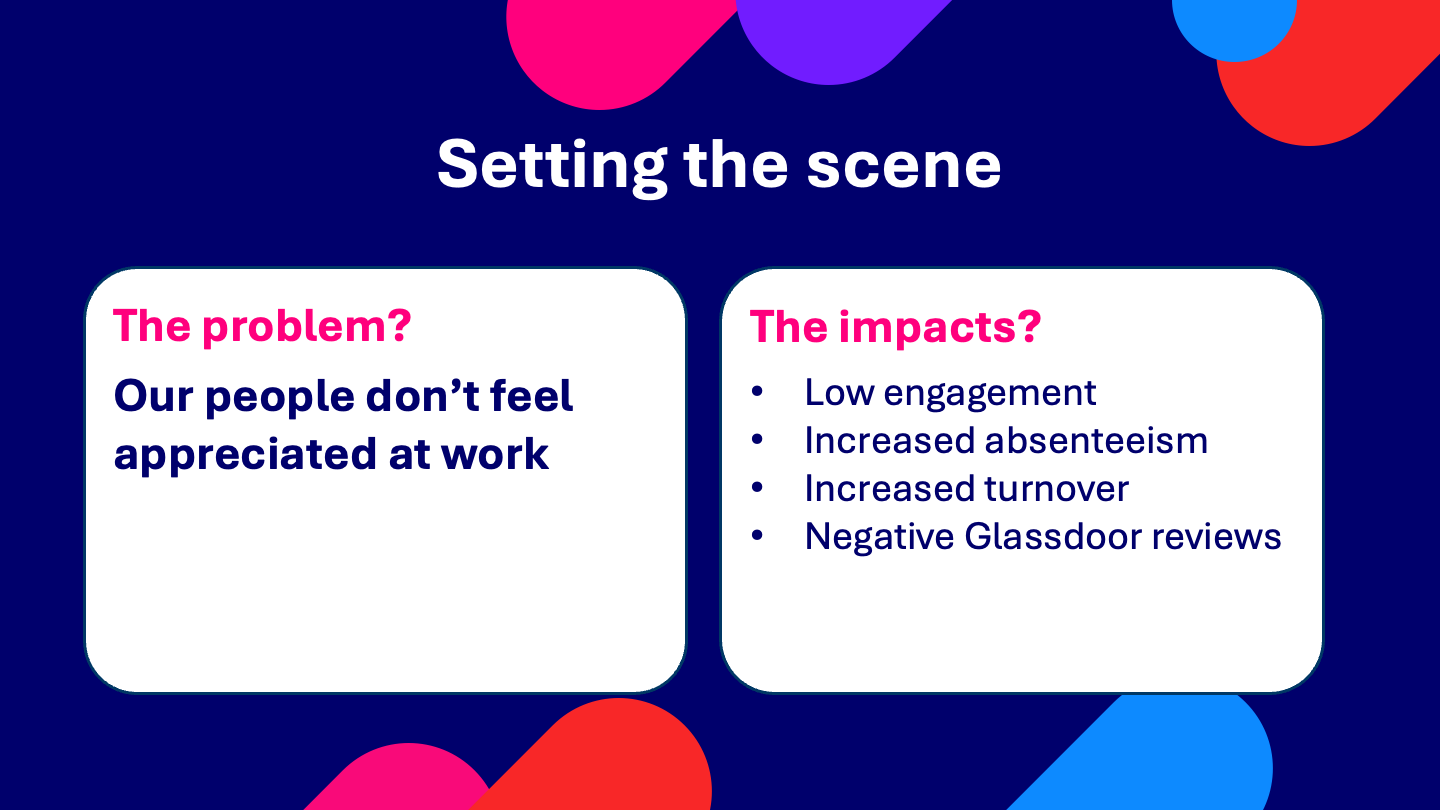
1. Setting the scene
Don't assume the group knows what you know and provide some higher level context.
Address these two points:
- What problem(s) are we trying to solve?
- What impacts have we seen?
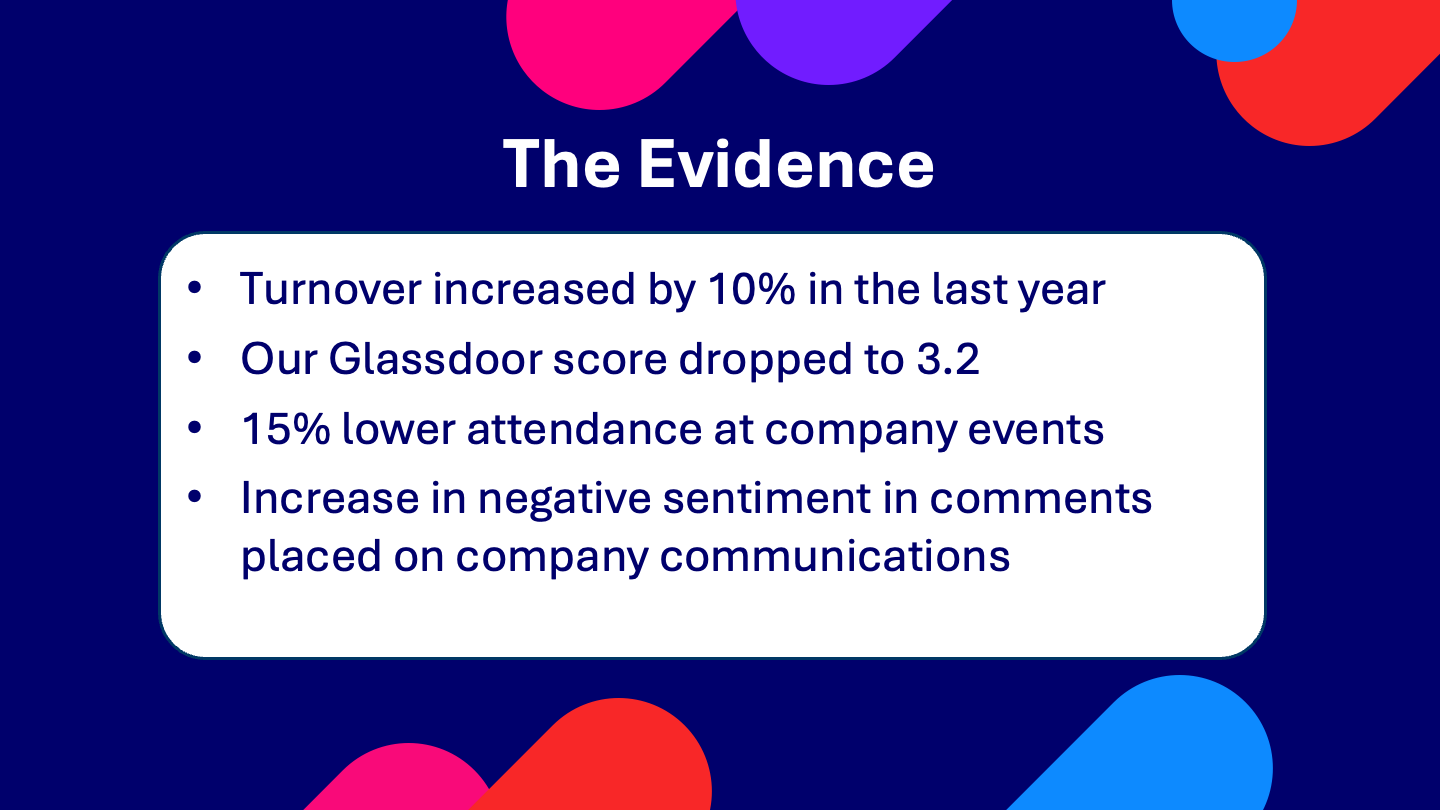
2. Present the evidence
Come to the presentation with more than your opinion.
Provide 3-4 pieces of evidence that will speak to your audience.
Tell them the story that will help them see what you see and understand the concern that you have.
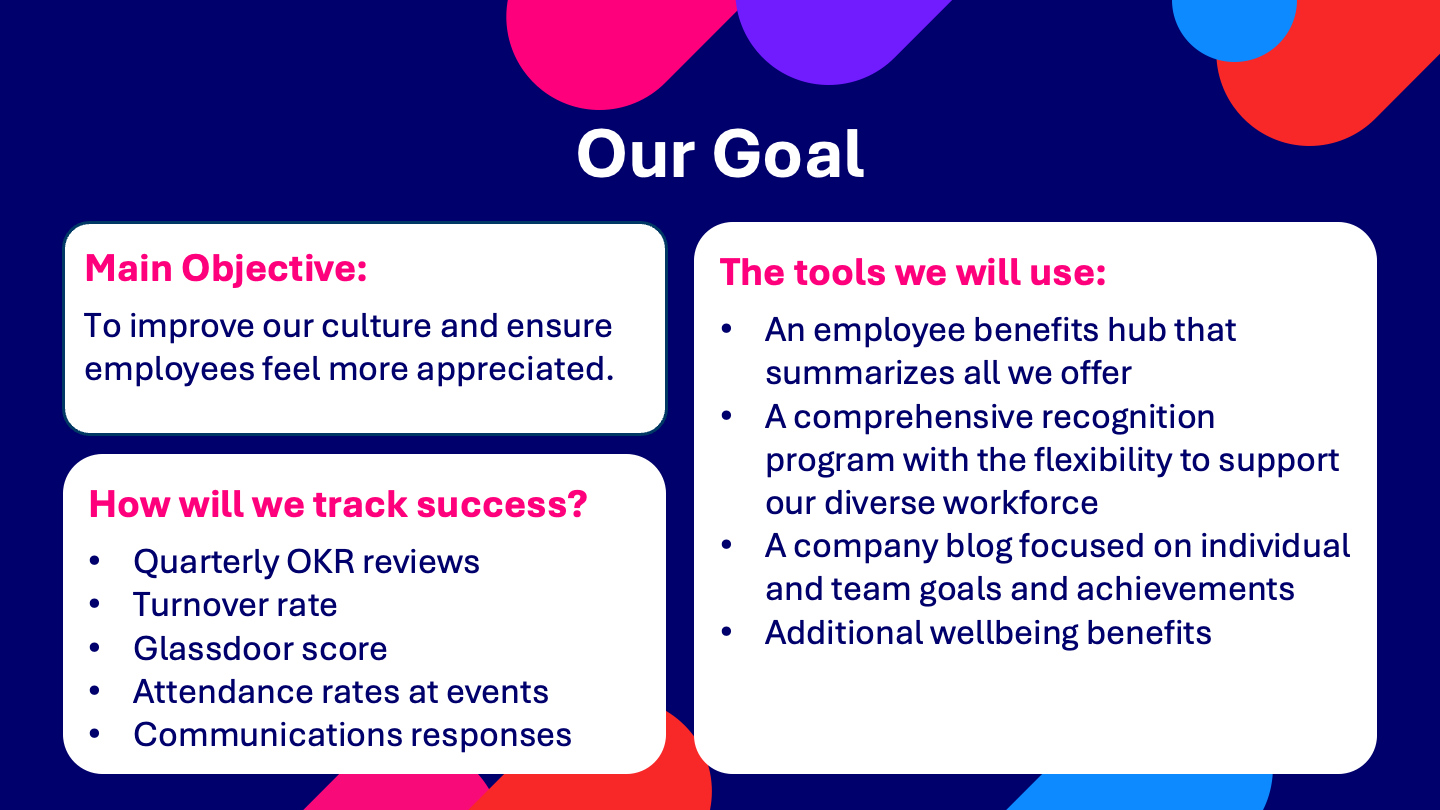
3. Define the goal
Now you can turn the corner to what you WANT to happen. Make the goal clear and highlight accountability.
Ensure your goals are clearly mapped to existing internal goals (e.g., your mission, your EVP, your KPIs or brand goals).
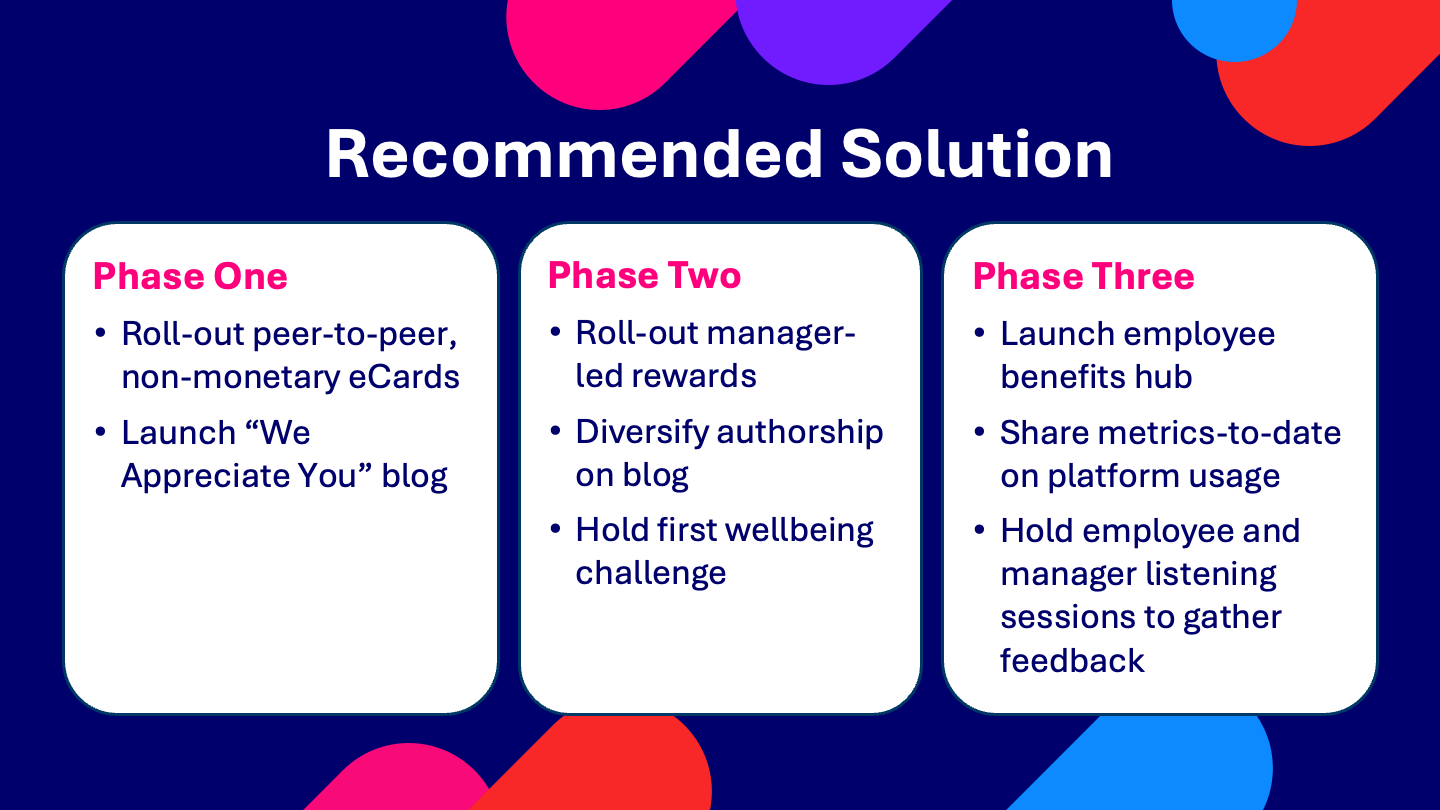
4. Present the solution
As you arrive at this part of your presentation, hopefully you already socialized the plan so there aren't any surprises for key stakeholders.
Presenting the solution in phases will make it easier for the audience to understand and accept. It also shows there are opportunities to evaluate and course correct as you go.
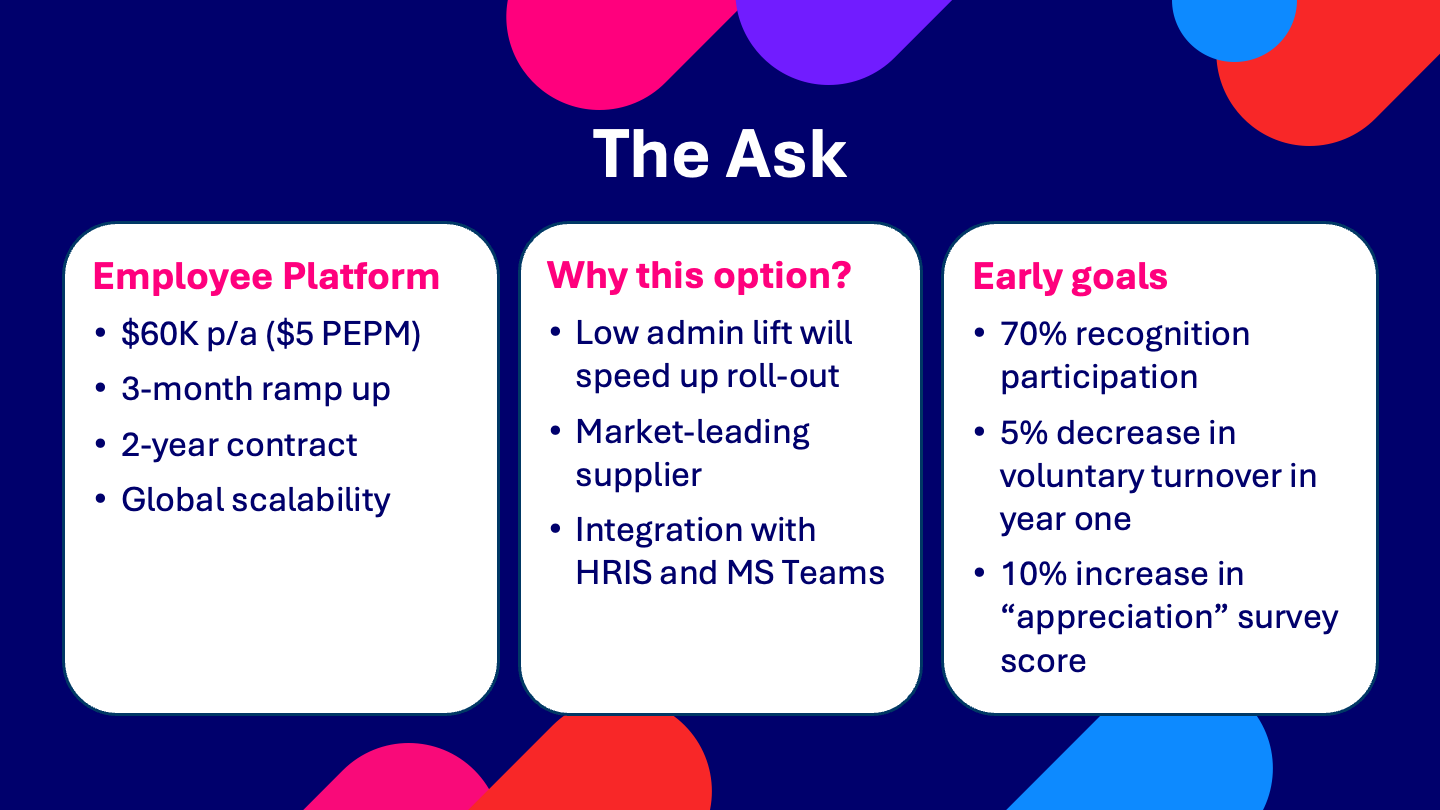
5. Make your pitch
Now that you have presented all that is possible, make your recommendation.
This is especially effective if you have allies or champions in the room that already know what you are asking for and agree it is worth the investment.
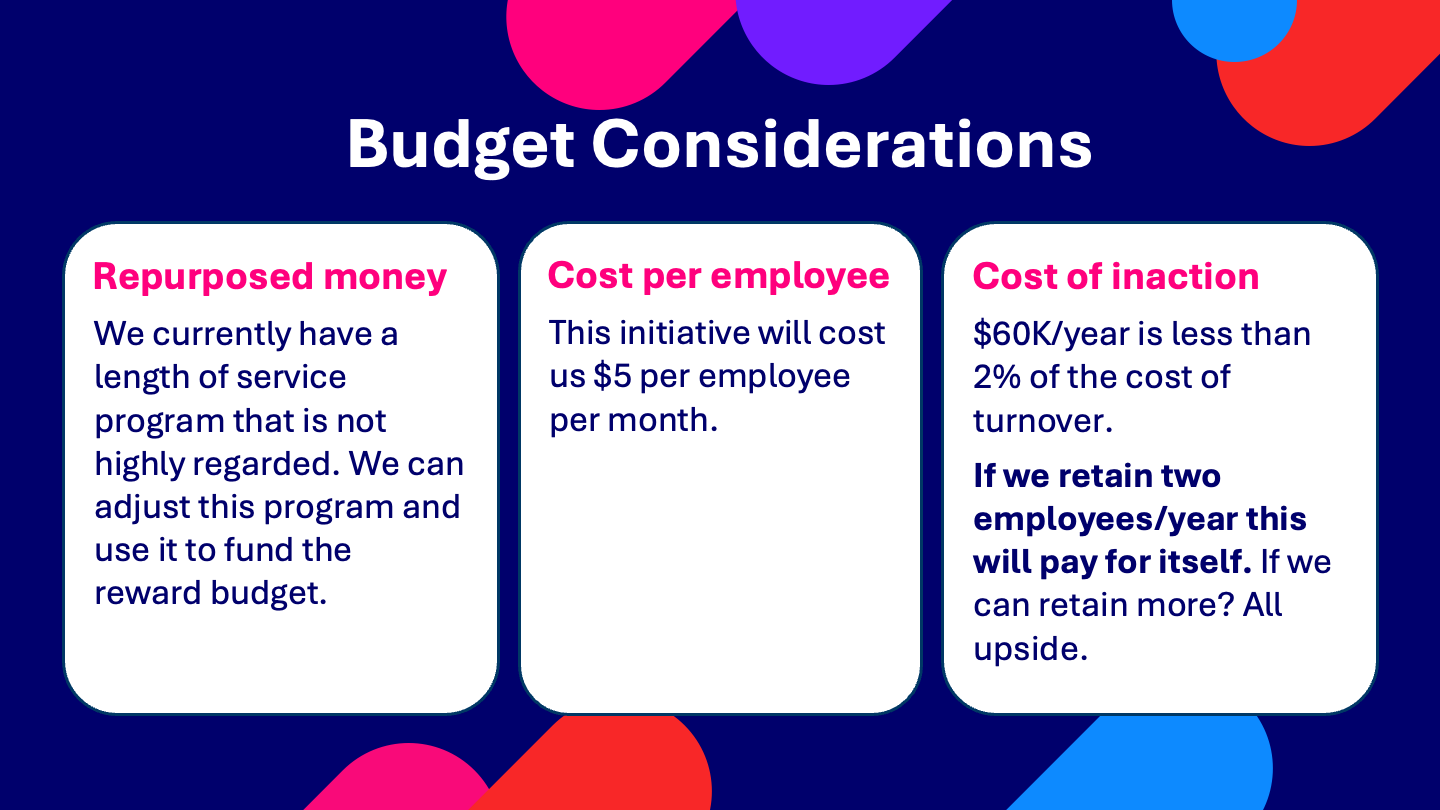
Prepare for pushback on budget
Requesting budget can feel like the hardest part of creating a business case for employee engagement. You may feel inspired by all that you can do, but you know once you put a number on the screen, people may be quick to forget all that is possible and prepare to tell you ‘no’.
Here is an example of how you can present costs and budget with context, so your idea has the best chance of moving forward.
Watch this clip to gain insight on including "What's in it for me" when creating a business case for employee engagement.
Explore these resources for more inspiration
Explore our products
Recognition & Reward
Meaningful, flexible recognition and reward that drives culture and business results.
Wellbeing
All your wellbeing tools in one place, so support is always within reach.
Commuter Benefits
A personalized, mobile-first benefits experience your people actually use.
Discounts
Everyday savings across hundreds of retailers to put money back in the pockets of employees.