Federal Budget 2026: What it means for your people strategy


The Federal Budget announced last week represents the biggest shift in Australian tax policy in decades. For Australian businesses, it signals a new operating environment where proactive planning is essential, not optional.
Beyond boardrooms and balance sheets, these changes will also shape how people feel about their jobs, spending, and future security. That means HR, People and Finance leaders have a shared mandate: steady confidence, protect wellbeing, and keep your employee value proposition (EVP) compelling while your people digest the reforms.
This blog summarises what changed, what it means for employers and employees, and how to adapt your people strategy in the wake of these seismic shifts.
What changed in the 2026 Federal Budget
At the heart of the Australian Federal Budget in 2026 is a sweeping overhaul of tax settings that will reshape how businesses and people invest, structure operations, and build wealth.
From 1 July 2027, the 50% Capital Gains Tax (CGT) discount will be abolished and replaced with cost-base indexation and a new 30% minimum tax on realised gains. Pre-1985 assets will lose their historical exemption for future capital growth. Property investors will also face a reorientation of incentives, with negative gearing concessions largely limited to new-build properties.
Discretionary trusts will see significant change from 1 July 2028, as trust income becomes subject to a 30% minimum tax and no credit will be available for distributions to corporate beneficiaries; for some structures, the effective tax rate could exceed 50%.
These shifts will have a broad reach. More than 840,000 discretionary trusts could be affected. Traditional family business and investment structures that have long underpinned economic growth may become less tax effective, prompting a reassessment of ownership models, succession and estate plans, and investment strategies.
While there are some supportive measures, such as expanded access to the R&D Tax Incentive through a higher SME threshold of $50 million and broader venture capital eligibility, these are unlikely to offset the broader structural tax increases that most Australian businesses will face.
The practical reality is more complexity and more compliance. Businesses should expect a heavier administrative and advisory burden, including CGT asset valuations and apportionments, reassessment of R&D tax claims, and more extensive tax modelling and restructuring analysis. In the near term, that can draw leadership focus and cash away from expansion and towards restructuring.
How sentiment may shift for consumers and employees
Budget reforms don’t just change spreadsheets, they change psychology. As households and small businesses digest the reforms, a period of greater caution is likely. Reduced perceived wealth and lower expected investment returns can dampen confidence. Tighter property investment settings may soften demand and slow price expectations, which often feeds into broader household sentiment.
 With higher uncertainty, both households and SMEs may tend to delay big-ticket purchases, and a defensive mindset can take hold, favouring savings and income over capital growth. Slower business investment typically weighs on labour market optimism, moderating expectations for hiring, wage growth, and job security. The most probable pattern is a dip in sentiment in the short term as markets recalibrate, followed by gradual stabilisation as the new rules are absorbed and investment strategies are reset.
Implications for employers
For employers, these dynamics matter as much as the tax provisions themselves. Restructuring and compliance costs may place pressure on cash flows and budgets, creating trade-offs in investment, hiring, and reward. Family businesses will likely revisit trust arrangements, distributions, and succession plans, which can influence dividends, bonuses, and profit-sharing decisions.
If equity or long-term incentives appear less attractive under new CGT settings, your EVP will need to work harder to retain critical talent. Uncertainty can also sap focus and morale. Without clear, consistent communication and tangible support, employees may feel anxious about their financial position and their future, which can weigh on engagement and performance.
What employees are likely to feel and need
Employees are already contending with cost-of-living pressures. Budget changes that alter property investment incentives and the tax treatment of capital gains can add another layer of complexity to personal financial plans. Many people will respond by delaying major purchases, increasing savings buffers, and looking for ways to stretch everyday dollars.
In that environment, predictability and transparency become more valuable. Reliable income, benefits that reduce day-to-day costs, and employers who explain what’s happening in clear, non-technical language will do a lot to sustain confidence.
Adapting your people strategy
When pay comes under greater scrutiny, reinforce the value of guaranteed benefits and strengthen non-cash levers such as recognition, rewards, wellbeing, learning and flexibility. Review equity plans and long-term incentives to understand how CGT changes might affect perceived value, and make sure your communications explain the implications simply and openly.
Financial wellbeing deserves renewed emphasis. Practical, high-uptake benefits that improve everyday affordability; for example, employee discounts on groceries, fuel, utilities, and retail purchases can make a noticeable difference when people are tightening budgets.
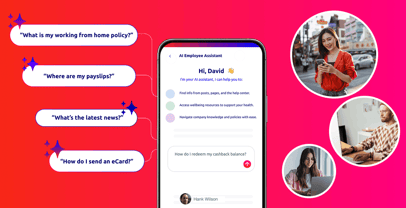
Pair those savings with accessible financial education and tools so employees can make informed decisions. Make it easy to discover and use support by consolidating information in one digital hub and highlighting the most relevant programs or benefits..png?width=400&height=300&name=adaptability-report-cover-image%20(1).png)
Recognition should play a central role in protecting engagement. In periods of uncertainty, our research has shown that recognition and rewards can boost engagement and productivity and ease concerns.
When big investment announcements are on hold, frequent, specific, and values-based recognition helps teams see progress, feel appreciated, and stay focused on what matters most. Managers need to lead the way, but peer-to-peer recognition can amplify impact and sustain momentum.
Finally, communicate consistently and transparently. A short, plain-English explainer about what the Budget may mean for your business and the broader economy can go a long way. Equip managers with talking points and FAQs so they can hold confident team conversations. Pulse-check sentiment and comprehension regularly and adjust your messages and supports based on what you learn.
A 30-60-90 day plan to steady confidence
In the next 30 days, bring Finance, HR/People, Legal, and Communications together in a small taskforce to track the reforms and coordinate the response. Run a quick pulse survey to gauge confidence, financial stress, and awareness of existing benefits. Share an all-staff note that outlines what has changed, what the business is reviewing, and where employees can find support. Audit your benefits stack for immediate cost-of-living impact and ensure the most helpful programs are easy to find and use. Brief leaders and managers so they can acknowledge uncertainty without fuelling anxiety and reinforce focus and care.
Between days 31 and 60, model different reward scenarios that consider base and variable pay, equity, and recognition budgets under a range of business conditions. Launch a financial wellbeing campaign that combines bite-sized learning, budgeting tools, and clear signposts to savings programs. Increase the cadence of recognition and spotlight wins tied to current priorities such as efficiency, client care, and innovation. Use your communications hub to segment updates and tailor messages for managers, frontline teams, and locations experiencing higher cost pressures.
By days 61 to 90, finalise any changes to your plans for hiring, pay reviews, and non-cash benefits, and be explicit about the decision principles you used. Refresh your EVP messaging to emphasise stability, support, and growth pathways. Put quarterly reviews in place to track engagement, recognition activity, and benefit utilisation, including savings delivered, and use these insights to iterate your approach.
Specific considerations for family-owned and multi-entity businesses
Trust changes may materially alter effective tax rates, dividends, and profit distributions. Align ownership and succession reviews with a talent retention plan so changes to distributions do not inadvertently put your leadership bench at risk. If equity or distributions become less tax-effective, consider how else to keep leaders and specialists engaged during the transition. For example, through targeted recognition, development opportunities, flexible work arrangements, and thoughtfully structured incentives that balance cash and non-cash elements. Communicate early with affected stakeholders to reduce rumours and maintain confidence.
How Reward Gateway | Edenred can help you navigate the transition
Reward Gateway | Edenred is designed to help employers protect engagement, wellbeing, and performance, especially when external confidence dips and market conditions are tough. Our discounts program helps employees stretch their pay with everyday savings across supermarkets, fuel, utilities, fashion, travel, technology, and more, and we make it easy to promote the most relevant offers so your people see immediate value.
Our recognition platform makes frequent, meaningful, and values-based recognition simple for managers and peers, helping you celebrate progress on critical projects even when big business shifts are on the horizon. We also provide a central, branded hub for all important links, updates, communications, FAQs, and plain-English explainers, with the ability to target messages by location or audience and gather quick feedback with surveys and polls. Finally, we give you the data to measure what’s working, from engagement and recognition activity to benefit utilisation and savings, so you can prioritise the highest-impact supports quarter by quarter.
What to do next
Brief your executive team on the People implications of the federal budget, not just the tax and structural impacts. Assess employee sentiment, identify groups at higher financial risk, and promote the benefits that lower everyday costs. Increase low-cost, high-impact recognition to protect morale and focus. Communicate clearly and centralise information so employees know where to go for help.
These reforms will likely prompt a short-term dip in confidence and investment while businesses and households adjust. The employers who win through this transition will move early; clarifying plans, shoring up their EVP, and giving employees tangible support to feel secure and stay focused. Reward Gateway | Edenred can help you boost confidence, reduce everyday costs for your people, and keep your culture strong. If you’d like to see how others are navigating this shift and what might work best for your workforce, let’s talk.
Note: This article is for general information only and is not financial or tax advice. Please seek professional advice for your specific circumstances.
To learn more about our Employee Engagement Platform and how it can support your people during times of uncertainty and change, schedule a free consultation with one of our experts.