




 Krista Brennan

Gratitude at work can sound a little soft and squishy – right up until you look at the business results.
In practice, a culture of appreciation helps people feel seen, supported and more connected to their work, and that tends to show up in the metrics HR teams care about: engagement, wellbeing, retention and day-to-day performance. Personalized recognition is linked with stronger feelings of appreciation, connection, wellbeing and intent to stay.
In other words, workplace gratitude isn’t just about being nice (though being nice is obviously a solid start). It’s a practical, research-backed way to build a healthier culture and a stronger employee experience without reinventing your entire people strategy. In the sections ahead, we’ll look at what workplace gratitude actually means, why it matters and how HR leaders can make it a consistent part of everyday work.
What is workplace gratitude?
 Workplace gratitude is the intentional practice of noticing, acknowledging and valuing people for their contributions, effort and impact at work. Not just when someone lands a big win, and not only during performance review season, but as an ongoing part of how people experience the organization day to day.
That’s what separates gratitude from generic recognition or the occasional “thanks!” dropped into a chat thread. A one-off thank-you can be nice in the moment, but workplace gratitude goes deeper. It’s specific, consistent and rooted in genuine appreciation for both what employees do and who they are as part of the team.
At its best, workplace gratitude becomes a habit, not a holiday. Managers make a point to recognize progress, peers celebrate each other’s support and collaboration, and leaders reinforce the behaviors and values the organization wants to see more often. The result is a workplace where appreciation feels built in rather than bolted on.
For HR leaders, that distinction matters. When gratitude is treated as an intentional, ongoing practice, it helps create a culture where employees feel visible, valued and motivated to keep contributing – not because they got one nice message last Thursday, but because appreciation is part of how work gets done.

6 proven benefits of gratitude in the workplace
When gratitude becomes part of the employee experience, the impact doesn’t stop at making people feel good for five minutes – though that’s a nice bonus. It can shape how employees feel about their work, how teams function together and how the organization performs over time. In short, gratitude has a way of improving both the human side of work and the business side, which is exactly the kind of multitasking HR leaders appreciate.
1. Strengthens employee wellbeing
Feeling appreciated can have a meaningful effect on how employees experience work day to day. When people know their effort matters, they’re more likely to feel supported, motivated and emotionally connected to their workplace. That matters because wellbeing isn’t just about access to resources; it’s also about whether employees feel seen as people, not just producers of calendar invites and quarterly deliverables.
Gratitude helps reinforce a sense of value and belonging, which can create a healthier foundation for both individual resilience and overall employee experience.
2. Improves employee engagement
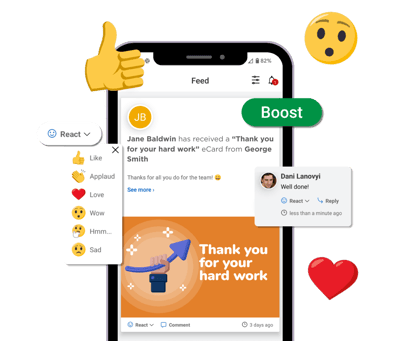 Employees are more likely to stay engaged when they believe their contributions are noticed. Gratitude creates that feedback loop. It tells people that their work has impact, that their effort isn’t disappearing into the corporate void and that what they do every day matters to the team and the business.
That sense of appreciation can strengthen emotional commitment to the organization. 82% of employees say personalized recognition makes them feel more connected to their workplace. And connection is a pretty reliable engagement booster.
3. Increases job satisfaction
Job satisfaction is shaped by more than compensation and job titles. Employees also want to feel respected, valued and acknowledged for the role they play in the organization. Gratitude supports that by making appreciation more visible and more frequent, instead of leaving it implied and hoping people somehow just know.
When employees regularly hear that their work matters, they’re more likely to feel positive about their role and their workplace overall. Over time, that can help create a more rewarding employee experience – without relying solely on flashy perks or once-a-year morale campaigns.
4. Reduces stress and absenteeism
 Workplaces that lack appreciation can start to feel draining fast. When effort goes unnoticed, employees may feel disconnected, discouraged or like they’re running on fumes with no real signal that it matters. Gratitude helps counter that by reinforcing support, progress and human connection – all of which can ease some of the emotional strain people carry at work.
73% of employees say personalized recognition helps them feel less stressed (RGER). And when stress comes down, organizations often see positive ripple effects in attendance, energy levels and overall team stability.
5. Raises retention rates
Employees are more likely to stay where they feel valued. It’s not complicated, but it is important. Gratitude helps reinforce that employees are making a difference, which can strengthen loyalty and reduce the temptation to look elsewhere for appreciation they’re not getting internally.
That connection shows up clearly in the data: 81% of employees say customized recognition makes them more likely to stay with their company longer (RGER). For HR teams focused on retention, gratitude isn’t a feel-good extra – it’s a practical way to help people feel more invested in staying put.
6. Builds a positive workplace culture
Culture is built through repeated behaviors, not just nicely designed values posters in the break room. When gratitude is part of how people interact, it sets a tone of respect, encouragement and shared appreciation. Teams become more likely to celebrate effort, recognize collaboration and reinforce the behaviors that make the workplace stronger.
Over time, that creates a culture where people feel more connected to one another and more confident that their contributions matter. And when appreciation becomes normal, not rare, positive culture stops being an aspiration and starts becoming the everyday experience.
Practical ways to foster gratitude at work
Knowing gratitude matters is one thing. Building it into the workday so it actually sticks is another. For HR leaders, the goal isn’t to create random bursts of appreciation whenever someone remembers – it’s to make recognition consistent, visible and meaningfully connected to what the organization values.
That’s where structure helps. When gratitude is supported by clear programs, shared habits and leadership behaviors, it becomes easier for employees to participate and easier for the culture to sustain. Instead of relying on a few naturally expressive managers and one enthusiastic person in People Ops, the organization creates a system that makes appreciation part of how work happens.
Create a formal recognition program
 A formal recognition program gives gratitude a reliable home. It creates a clear way for employees and managers to celebrate contributions, milestones and behaviors worth reinforcing, without leaving appreciation up to chance.
The best programs make recognition easy to give, easy to receive and easy to connect back to business goals. They also help HR ensure appreciation is happening consistently across teams, locations and leadership levels, not just in the departments with the loudest Slack channels.
Encourage peer-to-peer recognition
Gratitude has more staying power when it moves in every direction. While manager recognition matters, peer-to-peer recognition helps appreciation become part of the everyday team dynamic, rather than a top-down event.
Coworkers often see the small but important moments leaders miss: someone stepping in to help on a deadline, smoothing out a messy handoff or quietly keeping a project from going off the rails. Giving employees a way to recognize one another makes those contributions more visible and helps build stronger day-to-day connection across teams.
Model recognition from the top down
If leaders don’t visibly practice gratitude, employees get the message pretty quickly: this is a nice idea, not a real priority. Leadership behavior sets the tone for whether appreciation feels authentic, encouraged and worth making time for.
When executives and people managers regularly acknowledge effort, celebrate progress and connect recognition to team impact, they show that gratitude belongs in the culture – not just in HR messaging. That kind of example can go a long way in turning appreciation from a recommendation into a norm.
Make gratitude a part of daily routines
Gratitude is more sustainable when it’s woven into existing rhythms instead of treated like an extra task everyone will definitely remember to do later and absolutely not forget by Thursday. Small, repeatable habits tend to work better than occasional grand gestures.
That might mean opening team meetings with shout-outs, building recognition into one-on-ones or creating space in internal communications to highlight contributions across the business. The specific format matters less than the consistency. Regular moments of appreciation help gratitude feel natural instead of performative.
Tie gratitude to company values
Recognition has more impact when it points to something bigger than “good job.” Tying gratitude to company values helps employees understand which behaviors the organization wants to encourage and why those actions matter.
This also gives appreciation more strategic weight. Instead of recognition floating around as a nice cultural add-on, it becomes a way to reinforce mission, behaviors and expectations in real time. For HR, that creates a stronger link between culture-building and business priorities – which is a lot more useful than vague positivity on its own.
Common challenges to showing gratitude in the workplace (and how to overcome them)
Of course, building a culture of gratitude is not always as simple as telling everyone to be more appreciative and hoping for the best. HR leaders are often working against real constraints: packed calendars, uneven manager habits, skeptical employees and leaders who support recognition in theory but somehow never get around to modeling it in practice.
The good news is that these barriers are common, which also means they’re workable. With the right structure, messaging and leadership support, gratitude can move from “nice idea” territory into something employees actually experience consistently.
No time for gratitude
This is one of the most common obstacles, and also one of the most fixable. In busy organizations, recognition can start to feel optional – something people will do when things calm down... which, as we all know, is a magical future state that never arrives.
The solution is to make gratitude simple and built into existing workflows. Short recognition moments in meetings, lightweight peer-to-peer tools and manager prompts can all help appreciation happen without adding a giant new process. When gratitude is easy to give in real time, it’s much more likely to become a habit.
Lack of leadership buy-in
If leaders don’t see gratitude as a business tool, it can quickly get dismissed as fluffy, informal or secondary to “real” priorities. That creates a problem because employees tend to notice what leaders reinforce, not just what HR recommends.
To overcome this, connect gratitude to outcomes leaders already care about, like engagement, retention, wellbeing and culture. Share relevant data, highlight internal success stories and make the case that recognition supports performance rather than distracting from it. Once leaders understand that appreciation is not separate from business results, buy-in gets a lot easier to build.
Resistance to change
Even positive changes can trigger eye-rolls if employees think a new gratitude initiative will feel forced, scripted or painfully corporate. If appreciation suddenly appears out of nowhere with overly polished messaging and no clear purpose, some resistance is completely predictable.
The best response is authenticity. Keep the approach practical, encourage specific and meaningful recognition and avoid turning gratitude into a compliance exercise. Starting small can help too. When employees see appreciation happening in a genuine way – and not as part of a weird mandatory enthusiasm campaign – they’re more likely to participate and trust the process.
Build a culture of gratitude with Reward Gateway | Edenred
Creating a culture of gratitude takes more than good intentions. It takes the right tools, consistent habits and a way to make appreciation visible across the organization – not just in pockets where it already comes naturally. That’s where Reward Gateway | Edenred can help.
Reward Gateway helps HR teams turn gratitude into an everyday part of work through recognition and reward experiences that are easy to use, easy to scale and easy to connect to company values. With the right structure in place, organizations can encourage peer-to-peer recognition, support manager appreciation, celebrate meaningful moments and make it clear which behaviors matter most.
Learn more abouthow Reward Gateway | Edenred can help you create a culture of gratitude in your organization and make your corner of the world a better place to work.
