




 Emily Mellwood

Deskless employees are serving customers, stocking shelves, caring for patients, driving routes, operating equipment, preparing food and keeping businesses running. They are the vast majority of the global workforce – keeping all the places going. And yet, when it comes to communication and engagement, they’re often the hardest employees to reach.
That gap creates real business risk. If your people don’t sit behind a desk, log into a company laptop or regularly check corporate email, important updates can miss the mark entirely. Culture can feel distant. Recognition can be inconsistent. And employees can start to feel like they’re working for the company, not with it.
For HR leaders, this is both a challenge and an opportunity.
The good news: Connecting deskless employees doesn’t require reinventing your entire people strategy. It requires practical, thoughtful approaches that fit how frontline teams actually work. In this guide, we’ll walk through eight actionable ways to strengthen communication, improve engagement and build stronger connections between corporate messaging and the people closest to your customers.
Why connecting deskless employees matters more than ever
When deskless employees feel informed, included and appreciated, the business benefits show up quickly.
Connection has a direct impact on retention, productivity, customer experience and culture. Employees who understand what’s happening in the business and how their role contributes are more likely to stay, perform well and deliver a better experience to customers. That matters even more in industries where turnover is high and every departure brings additional hiring, onboarding and training costs.
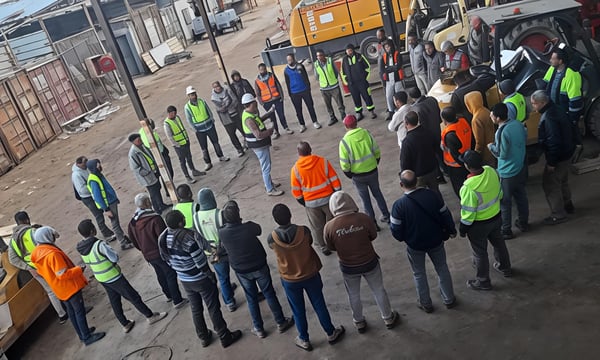
And deskless industries often face a familiar set of obstacles:
- Limited access to traditional communication channels like email and intranets
- Irregular schedules and shift-based work that make real-time updates difficult
- Fewer opportunities to participate in cultural moments happening at headquarters
- Inconsistent recognition and feedback
- High turnover that can make long-term engagement harder to sustain
There’s also a brand impact to consider. Deskless employees are often the face of the organization. They’re the ones interacting with customers, patients, guests, passengers and partners every day. If they feel disconnected, unsupported or out of the loop, that experience can ripple outward fast.
In other words, frontline engagement is an operational strategy wearing a name badge.
1. Implement mobile-first communication platforms
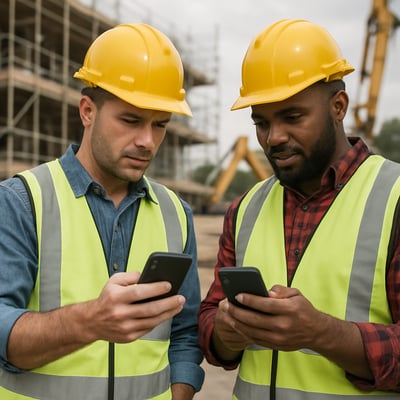 For deskless employees, mobile isn’t a convenience. It’s the channel.
If your workforce doesn’t regularly use desks, laptops or corporate email, then communication needs to happen where employees already are: on their phones. A mobile-first platform makes it easier for employees to access company news, schedules, policy updates, benefits information, recognition and resources without needing to hunt for a shared computer or wait until a shift ends.
That accessibility matters because it reduces friction. And in communication, friction is often the reason messages go unread.
Mobile-first tools can help HR teams:
- Share timely updates across locations and shifts
- Centralize important information in one easy-to-access place
- Deliver recognition in real time
- Give employees self-service access to benefits and company resources
- Create a more consistent employee experience across the organization
The key is to design communication for mobile from the start, not simply shrink desktop content onto a smaller screen and hope for the best.
2. Empower managers to champion communication
 For deskless employees, managers are often the most trusted and influential source of information.
That means even the best communication strategy can fall flat if managers aren’t equipped to deliver messages clearly and consistently. On the other hand, when managers know how to communicate well, they can turn company updates into meaningful conversations that employees actually understand and remember.
HR leaders should treat managers as communication champions, not just message relayers.
That includes training them to:
- Share updates in a clear, timely and transparent way
- Explain the “why” behind changes, not just the “what”
- Tailor messaging to the realities of frontline work
- Encourage questions and feedback
- Reinforce key priorities regularly, not just once
A short script, talking points or weekly briefing can go a long way in helping managers stay aligned. Because when communication varies widely from one location or shift to the next, employees notice – and not in a good way.
3. Use digital signage and physical displays in common areas
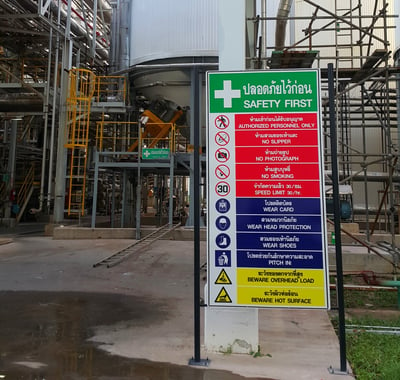 Not every employee can check an app or read a message during a shift. That’s where digital signage and physical displays still play an important role.
Screens in break rooms, locker rooms, time-clock stations and production areas can help reinforce important updates in places employees naturally pass through. Bulletin boards, posters and printed summaries can do the same, especially in environments where phone use is limited or impractical.
This is the value of “second space” communication: meeting employees in common areas where they already gather, rather than interrupting them while they’re trying to do the job safely and efficiently.
Use these spaces to highlight:
- Safety reminders
- Shift updates and scheduling information
- Recognition moments
- Upcoming events or enrollment deadlines
- Business wins and team milestones
The content should be easy to scan and quick to understand. Think headlines, visuals and short messages — not a wall of text that looks like it lost an argument with a policy manual.
4. Prioritize short-form, visual content
Deskless employees often don’t have the time, space or attention bandwidth to absorb long-form communication. If a message requires ten uninterrupted minutes and a cup of coffee, it may not be built for the frontline.
Short-form, visual content is more effective.
That can include:
- One-minute videos from leaders or managers
- Infographics that summarize key updates
- Visual job aids and quick-reference guides
- Short slide-style announcements
- Bite-sized training content
The goal is clarity, not oversimplification. Employees need enough information to understand the message and act on it, but not so much that the core point gets buried.
A good rule of thumb: if a message can be made shorter, clearer or more visual, it probably should be.
5. Create two-way communication channels
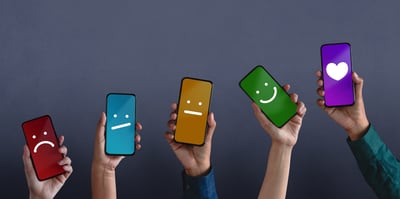 Communication can’t just be a broadcast strategy. If deskless employees only hear from the company when there’s a policy change or an urgent update, connection will feel transactional.
Employees need ways to respond, ask questions and share ideas. Two-way communication builds trust because it shows the organization is listening, not just announcing.
HR teams can create feedback loops through:
- Pulse surveys
- Always-on feedback forms
- Digital or physical suggestion boxes
- Team huddles with dedicated Q&A time
- Skip-level conversations
- Town halls with frontline participation
The format matters less than the follow-through. Asking for input without acting on it is a fast way to teach employees that feedback goes nowhere.
Close the loop by sharing what you heard, what you’re changing and what will happen next. Even when the answer is “not right now,” transparency builds credibility.
6. Recognize and reward deskless employees frequently
Recognition is one of the simplest and most effective ways to build connection with deskless employees — and one of the easiest to overlook.
Frontline workers are often moving fast, solving problems in real time and delivering essential work that keeps the business running. When that effort goes unnoticed, disengagement can follow. When it’s recognized consistently, employees are more likely to feel valued, connected and motivated to stay.
Recognition works best when it is:
- Frequent
- Specific
- Easy to give and receive
- Visible across teams when appropriate
- Tied to behaviors and outcomes that matter
For deskless workforces, strong recognition programs often include:
- Peer-to-peer recognition for teamwork and everyday support
- Manager recognition for performance, safety and customer service
- Milestone celebrations for service anniversaries and key moments
- Spot awards for above-and-beyond contributions
Accessibility is critical here too. If recognition only happens in desktop systems or during corporate events, many deskless employees will miss it entirely. The more inclusive and immediate the experience, the more meaningful it becomes.
7. Invest in onboarding and training for deskless workers
 The first six months can make or break the employee experience for deskless workers.
If onboarding is inconsistent, confusing or too focused on paperwork over connection, new hires may never fully engage. In high-turnover industries, that’s a costly mistake.
Early experiences shape whether employees feel confident, supported and likely to stay.
Strong onboarding should help deskless employees quickly understand:
- What’s expected of them
- How to do the job safely and well
- Where to find information and support
- What the company stands for
- How they fit into the bigger picture
And it shouldn’t stop after week one.
Ongoing training and development are equally important, especially when delivered in formats that fit frontline work. Micro-learning, short videos and mobile-friendly modules make it easier for employees to build skills without stepping away from the job for long stretches.
This also sends an important message: growth isn’t just for employees at headquarters.
8. Measure, learn and continuously improve
If you want to improve communication and engagement for deskless employees, measurement has to be part of the plan.
That means looking beyond whether a message was sent and paying attention to whether it was actually seen, understood and acted on. The right metrics can help HR teams identify what’s working, where gaps exist and how communication is influencing business outcomes.
Useful measures may include:
- Reach and open rates
- Content engagement and click-throughs
- Survey participation and sentiment
- Recognition activity
- Manager communication effectiveness
- Retention, absenteeism and productivity trends
- Customer satisfaction or service outcomes
Measurement helps you refine your approach over time and build a stronger business case for investment. It also ensures your strategy evolves with the workforce instead of staying stuck in last year’s assumptions.
Because if your frontline communication strategy is running on guesswork, it’s probably also running behind.
Build a more connected frontline team with Reward Gateway | Edenred
Connecting deskless employees takes more than good intentions. It takes the right tools, the right habits and a strategy built around how frontline employees actually work.
Reward Gateway | Edenred helps organizations reach, engage and recognize deskless employees with solutions designed for today’s workforce. From mobile-first communication and employee recognition to feedback and engagement tools, we help HR leaders create more connected experiences for every employee – not just the ones behind a desk.
If you’re ready to bridge the gap between corporate messaging and your frontline teams, Reward Gateway | Edenred can help you build a communication and recognition strategy that drives real results.
Learn more about how Reward Gateway | Edenred can help you make your organization a better place to work.
