4 must-have employee wellbeing tools for 2026
Discover four must-have employee wellbeing tools for 2026, from mental health and financial wellbeing support to Goals & Challenges that build healthy habits, engagement, and performance.


Employee wellbeing is no longer a “nice-to-have” benefit sitting on the sidelines of the employee experience. In 2026, it’s a core business priority that shapes engagement, productivity, retention, and organisational performance.
As employee expectations continue to evolve, employers are under increasing pressure to support the whole person, not just the role they perform at work. That means creating a wellbeing strategy that goes beyond isolated initiatives and instead holistically supports employees across mental, physical, social, and financial wellbeing.
The business case is clear. Our research shows that when employees feel supported by their organisation, they’re more likely to stay, contribute, and perform at their best. We also know that wellbeing and productivity are closely linked: when people feel healthier, more secure, and more connected, they bring more energy, focus, and resilience to work.
But impact doesn’t come from intent alone. It comes from putting the right tools in employees’ hands and making wellbeing easy to access, relevant to individual needs, and embedded into the everyday employee experience.
Here are four must-have employee wellbeing tools for 2026:
1. On-demand wellbeing content that supports everyday habits
A strong wellbeing strategy starts with access. Employees need support that is available when they need it, in formats that fit around their work and personal lives.
That’s where on-demand wellbeing content plays an important role. Whether employees are looking to improve their physical health, learn stress management techniques, build healthier routines, or better understand nutrition and sleep, digital content helps make wellbeing more practical and achievable.
This matters because wellbeing is not one-size-fits-all. Some employees may be looking for short guided workouts they can do at home. Others may want mindfulness resources, educational articles, or healthy habit ideas they can integrate into busy schedules. Providing a broad mix of content empowers employees to engage in ways that feel relevant to them.
Just as importantly, accessible wellbeing resources help shift support from reactive to proactive. Instead of only intervening when people are struggling, organisations can give employees tools that help them build resilience, establish healthy behaviours, and maintain their wellbeing over time.
For employers, this creates a stronger foundation for long-term performance. A workforce that can easily access helpful, practical content is better equipped to manage stress, stay energised, and make positive choices consistently.
2. Goals & Challenges that turn motivation into momentum
One of the biggest barriers to wellbeing isn’t awareness, it’s consistency. People often know what they want to improve, but sustaining motivation over time is much harder. That’s why Goals & Challenges are becoming such an important part of modern wellbeing strategies.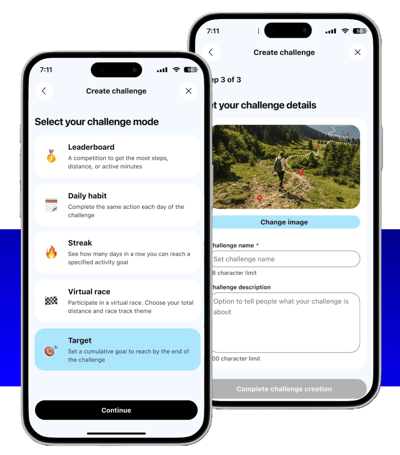
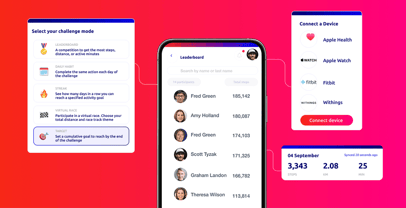
Self-guided personal goals help employees focus on the habits and behaviours that matter most to them, whether that’s moving more, improving sleep, drinking more water, building mindfulness into the day, or investing in learning and personal growth. With tools like step counters, habit tracking, custom habits, and wearable device compatibility, employees can pursue goals in a way that feels personal, achievable, and motivating.
This kind of autonomy is important. Employees are more likely to stay engaged when goals feel self-directed and relevant to their own lives, rather than imposed from the top down.
At the same time, collaborative challenges add the social motivation that often makes habits stick. Team challenges, virtual races, and organisation-wide leaderboards encourage friendly competition while building connection, accountability, and a shared sense of achievement. They can be especially effective in distributed or hybrid workplaces, where creating moments of camaraderie and collective momentum can otherwise be difficult.
This matters for culture as much as it does for wellbeing. Goals and challenges help instil positive behaviours, create a more goal-oriented mindset, and reinforce a culture of high achievement. They can also drive engagement with broader programs by linking participation to recognition, rewards, and other employee engagement initiatives.
And there’s a strong case for this kind of support. In our research, 32% of employees say recognising and rewarding employees for their contributions would enhance workplace wellbeing, while 49% of Australian and New Zealand employees say receiving recognition and rewards makes them feel more productive. When goals, challenges, recognition, and rewards work together, organisations can create a more engaging and sustainable employee experience.
Put simply: personal goals motivate people to be their best selves, while shared challenges help teams perform better together.
3. Financial wellbeing support that reduces stress and stretches pay further
Financial pressure continues to be one of the most significant threats to employee wellbeing, and its impact doesn’t stop outside of work.
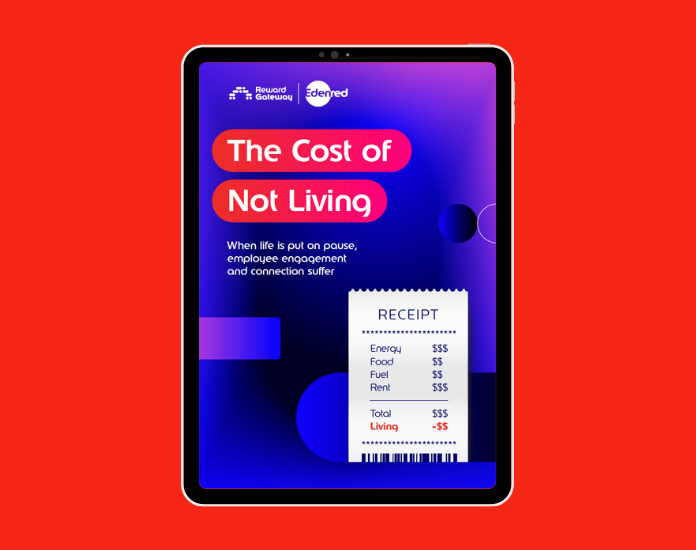
Our research in The Cost of Not Living Report found that 36% of Australian and New Zealand employees say cost-of-living pressures are causing them to feel less engaged at work. We also found that 61% of Australian employees and 64% of New Zealand employees report that financial stress has impacted their productivity.
These figures make one thing very clear: financial wellbeing is workplace wellbeing.
For organisations, that means financial support should be a core part of the wellbeing toolkit in 2026. This can include practical education and guidance around budgeting, saving, debt management, and planning ahead. But it should also include support that helps employees feel the impact immediately, such as employee discounts and everyday savings.
This is particularly important in the current climate. We’ve found that eight in 10 Australian and New Zealand employees say it would be helpful if their employer offered discounts on groceries and petrol, while six in 10 say financial wellness programs would be helpful, including budgeting tools and financial coaching.
When employees can save money on everyday essentials and access resources that improve financial confidence, the benefits extend well beyond their wallets. Reduced financial stress can improve focus, lower anxiety, and support a stronger sense of control and stability.
For employers, this means fewer distractions, stronger engagement, and a workforce that is better positioned to perform consistently.
4. Mental wellbeing support that’s visible, accessible, and stigma-free
Mental wellbeing remains one of the most important and most sensitive areas of employee support. In 2026, employees expect more than a checkbox approach, they want support that is easy to access, clearly communicated, and embedded into workplace culture.
That might include Employee Assistance Programs, counselling, coaching, manager education, mental health content, or dedicated wellbeing initiatives. But whatever form it takes, support needs to be visible and approachable if employees are going to use it.
This is where many organisations still have work to do. Simply offering support is not enough if employees don’t know it exists, don’t understand how to access it, or don’t feel safe using it.
The impact of getting this right can be significant. Our research shows that among employees who rated their employer’s mental wellbeing support as excellent or good, only 17% said they frequently experience loneliness at work. Among those who rated support as poor, that figure jumped to 42%.
These findings highlight the role mental wellbeing support plays not only in individual health, but also in belonging, connection, and day-to-day employee experience.
When organisations make mental wellbeing support easy to access and comfortable to talk about, they create healthier, more resilient teams. They also equip managers to better support their people and foster a culture where employees feel seen, supported, and able to bring their full selves to work.
Why these tools matter more in 2026
The most effective wellbeing strategies today are not built around one-off initiatives or isolated benefits. They are designed to work together as part of a broader employee engagement ecosystem.
On-demand wellbeing content helps employees build knowledge and healthier routines. Goals & Challenges create momentum, motivation, and connection. Financial wellbeing tools reduce one of the biggest sources of stress in employees’ lives. Mental wellbeing support gives people the care and confidence they need to navigate challenges and sustain performance.
Together, these tools help organisations move beyond performative wellbeing and towards something much more meaningful: a workplace where people feel supported, empowered, and motivated to thrive.
And that matters because wellbeing and performance are not opposing forces. In fact, they reinforce one another. When employees feel better, they work better. When they feel connected, recognised, and supported, they are more likely to stay engaged, put in that discretionary effort, and contribute at a high level over time.
Build healthier habits and a high-performing culture
At Reward Gateway | Edenred, we help organisations create employee experiences that support wellbeing, engagement, and performance in one connected platform. From wellbeing content and financial support to recognition, rewards, and Goals & Challenges, our solutions help employers build happier, healthier, and more productive workforces. In 2026, the organisations that stand out will be the ones that make wellbeing practical, personalised, and part of everyday working life.
Ready to create healthier habits and a higher-performing culture? Discover how Reward Gateway | Edenred can help you support employee wellbeing with recognition, rewards, savings, and Goals & Challenges in one connected platform.