



 Alexandra Powell
Workplace joy may sound like an abstract idea. But what if it could help leaders better understand the employee experience – and its connection to outcomes such as retention, productivity and engagement?
That’s the question behind Edenred’s Global Workplace Joy Index Report. The global research brings together the perspectives of 26,000 people across 27 markets to explore what workplace joy looks like around the world, what influences it and what it means for business.
Reward Gateway | Edenred has also released a U.S.-focused report, based on responses from 1,000 U.S. employees and 1,000 HR leaders. It offers a deeper dive into the U.S. data, including how people experience joy at work, the ROI of joy in business, where employee and HR perspectives differ, and how benefits and recognition support the employee experience.
Why joy?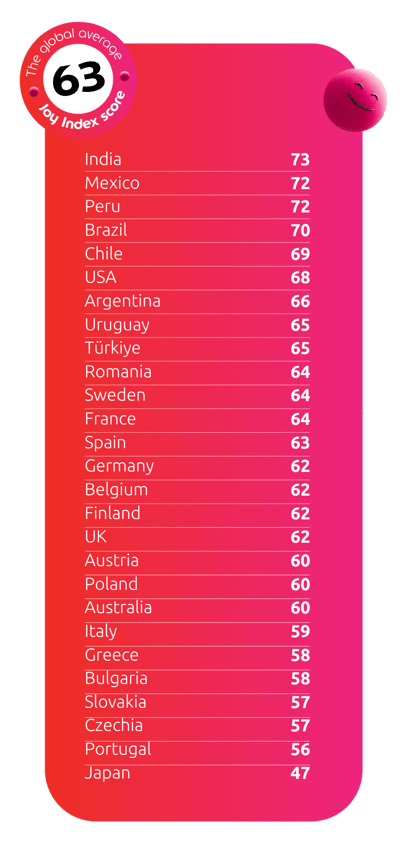
Joy may seem intangible, but employees have been seeing the headlines and experiencing the uncertainty of the job market. There is a growing tension as more workplaces are moving from a focus on a positive employee experience to a focus on the needs of the business (return to work efforts, layoffs, pressure to do more with less). Bringing something human and uplifting – like joy – into your cultural conversation is a great way to engage with employees and candidates and differentiate in the market. Imagine bringing some of the “Knicks in Five” energy into your workplace? Into your meetings?
Here are some of the report findings that stood out.
Joy is connected to employees’ intentions to stay
In the U.S. findings, 96% of high-joy employees expect to stay with their employer over the next 12 months, compared with 58% of low-joy employees. That 38-point difference makes workplace joy a useful topic in conversations about retention.
Employees link joy with feeling productive
The report finds a substantial difference in how employees perceive their productivity: 75% of high-joy workers say they feel more productive than a year ago, compared with 28% of low-joy workers.
Read the full report to learn more about what is influencing employee’s interest in staying and what is driving their productivity day-to-day.
Benefits are a meaningful part of the employee experience
For many employees, benefits are more than an addition to salary. 74% of U.S. workers say benefits are as important as salary or more important, rising to 85% among hybrid workers. When asked what organizations can do to foster joy, workers put good benefits first. The report also finds that high-joy workers receive an average of five benefits, compared with three for low-joy workers.
Recognition matters – and isn’t always consistent
Recognition and appreciation feature among the experiences employees associate with joy. Yet 18% of U.S. workers say they receive no formal or informal recognition from their manager in a typical month. The findings show that workers who receive JUST ONE MORE manager recognition a month report higher engagement and are more likely to say they feel productive.
HR and employees see joy differently
U.S. HR leaders rate workplace joy at 8.1 out of 10, while employees rate their own joy at 7.0. That gap highlights the importance of listening directly to employees and checking assumptions about how people are experiencing work.
The U.S. report offers HR and benefits leaders evidence to bring into discussions about employee experience, benefits and recognition. Its central message is not that there’s one formula for workplace joy, but that paying attention to how people feel – and what differs across employee groups – can help leaders ask better questions and focus their efforts.
Explore the U.S. findings in the Workplace Joy Index report.
