How to build healthy habits at work that last
Learn how to build healthy habits at work that last by making wellbeing simple, visible, social, and easy to repeat.

Most workplace wellbeing efforts don’t fail because people don’t care. They fail because good intentions aren’t enough to change everyday behaviour.
Employees already know that habits like moving more, taking breaks, recognising others, or managing money better can improve wellbeing. The challenge is turning those intentions into actions that actually stick, especially when work is busy, routines are disrupted, and attention is pulled in every direction.
That’s why healthy workplaces aren’t built through one-off moments of inspiration. They’re built through habits. Small actions, repeated consistently, shape how people feel, how teams work together, and how culture is experienced over time.
ACCESS OUR FREE RESOURCE: The Workplace Wellbeing Playbook
Why habits matter at work

Workplace culture is often talked about in big terms, like values, leadership, or strategy. But culture is also shaped by the small things people do every day.
It’s shaped by whether people take breaks without guilt, whether managers recognise effort regularly, whether teams collaborate together, whether support is easy to access, and whether healthy behaviours are encouraged in practice.
These repeated actions matter because habits reduce friction. They make healthy choices easier, more automatic, and more sustainable over time.
In the workplace, that can have a real impact. Healthy habits can help employees feel:
- More energised
- More focused
- Less overwhelmed
- More connected to colleagues
- More supported in their day-to-day experience of work
And when those habits are encouraged collectively, the impact extends beyond the individual. They begin to shape healthier teams, and healthier organisations.
Why one-off wellbeing initiatives don’t stick
Many organisations invest in wellbeing through events, awareness days, or short-term campaigns. These can help create attention, but they rarely create lasting behaviour change on their own. That’s because behaviour change depends on repetition, context, and ease.
If a wellbeing initiative only shows up once, or sits outside everyday work, it’s easy for employees to engage briefly, and then slip back into old habits. What’s missing isn’t interest. It’s a system that makes the behaviour easier to repeat.
That’s why the most effective wellbeing strategies focus less on occasional activity, and more on how healthy behaviours can become part of the daily rhythm of work.
Start small to build momentum
One of the biggest mistakes organisations make is trying to encourage too much change at once. When a new habit feels too ambitious, too time-consuming, or too disconnected from daily reality, it’s much harder to sustain.
A better approach is to start small. That might mean encouraging habits like:
- Taking a short walk at lunch
- Standing up between meetings
- Drinking more water during the day
- Recognising one colleague each week
- Setting a simple savings goal
- Swapping one sit-down meeting for a walk-and-talk
Small habits may seem insignificant in the moment, but they’re much easier to repeat, and repetition is what creates lasting change.
Make healthy habits visible
Habits are more likely to stick when they’re visible in the environment around us. At work, that visibility can come from team participation, shared goals, prompts, communication, and social reinforcement.
When healthy behaviours are visible, they start to feel normal. This matters because people are heavily influenced by what they see others doing. If wellbeing is hidden away in a separate platform or only mentioned occasionally, it’s easy to ignore. If it’s woven into everyday work, it becomes easier to adopt.
Make it social, not just individual
Healthy habits are often easier to sustain when they’re shared.
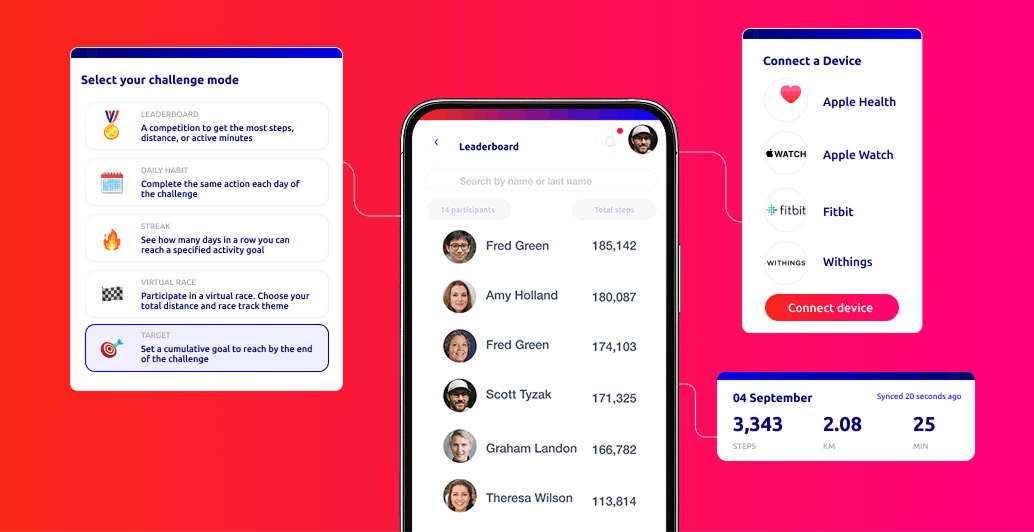
That’s one reason team-based wellbeing challenges can be so effective. Shared experiences create accountability, motivation, and connection. They help turn habits into something people do together, rather than something they’re expected to manage alone.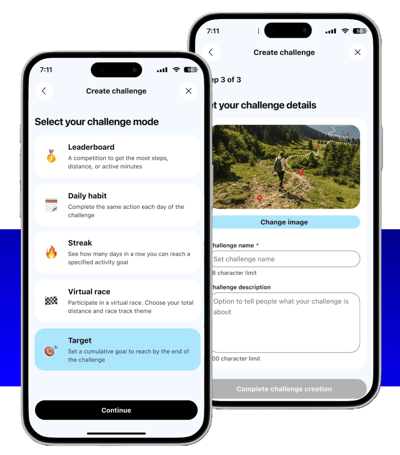
This could include:
- Step challenges
- Virtual races
- Team savings goals
- Regular recognition habits
- Collective wellbeing goals built around consistency
The social element matters because it adds encouragement. It also helps wellbeing feel more engaging, more visible, and more connected to culture.
For hybrid or distributed teams, this can be especially valuable.
Shared habits can create moments of connection that might otherwise be missing from the everyday employee experience.
Think beyond physical habits alone
When people hear “healthy habits,” they often think first about physical wellbeing. Movement, hydration, sleep, and nutrition all matter, but workplace habits should go further than that.
Some of the most valuable habits at work also support:
Financial wellbeing
Habits like budgeting, tracking savings, using discounts more intentionally, or setting simple financial goals can all help reduce stress and build confidence over time.
Recognition and belonging
Recognition can also be a habit. When appreciation becomes part of everyday behaviour, whether through peer-to-peer thanks, team rituals, or manager rewards, it helps people feel seen and valued more consistently.
Mental wellbeing and recovery
Habits around switching off, taking breaks, setting boundaries, and creating space for recovery can all support a healthier working experience.
The goal isn’t to create more pressure for employees to “optimise” themselves. It’s to make healthy, supportive behaviours easier to build into real working life.
Healthy habits help create healthy organisations
This is where habit-building becomes more than an individual wellbeing issue. It becomes an organisational one.
When healthy habits are encouraged consistently across teams, they start to shape the wider culture. They influence what feels normal, what gets reinforced, and what kind of behaviour people believe is valued.
For example:
- If recovery is encouraged, people are less likely to ignore burnout
- If recognition becomes routine, people are more likely to feel valued
- If movement is visible, healthy behaviour feels more accessible
- If financial wellbeing is supported, employees may feel less pressure
- If healthy habits are shared, connection and belonging may strengthen too
In this way, healthy habits don’t just support individual employees. They help create healthier organisations by reinforcing the behaviours that underpin sustainable performance.
The role of leaders and managers
Habits don’t exist in a vacuum. They’re shaped by what leaders and managers encourage, notice, and reward.
If a company tells employees to prioritise wellbeing, but managers only reward speed, urgency, or overwork, the message won’t stick. But when leaders role model healthy behaviours and reinforce them consistently, habits become much easier to sustain.
That means leaders should look closely at questions like:
- What behaviours are we rewarding?
- Are healthy habits visible in our teams?
- Do employees feel permission to take part in them?
- Are we reinforcing progress and consistency, not just big efforts?
Leaders don’t need to control every habit. But they do play a key role in creating the environment that helps those habits take hold.
How to help healthy habits stick
If you want to build healthier habits at work that last, focus on a few simple principles:
Keep it realistic
Choose habits that fit naturally into the working day.
Reduce friction
Make the behaviour easy to start, easy to access, and easy to repeat.
Reinforce it regularly
Use communication, visibility, recognition, and routine to keep the habit front of mind.
Make it collective where possible
Shared habits often feel more motivating, and help strengthen culture at the same time.
Celebrate consistency
Don’t just recognise big milestones. Reinforce the behaviours that happen steadily over time.
Final thoughts
Healthy habits at work aren’t just good for individual wellbeing. They help shape the kind of organisation people experience every day.
When healthy behaviours are made visible, achievable, and part of the normal rhythm of work, they’re far more likely to last. And when those habits are shared across teams, they help build a culture that feels more supportive, more connected, and more sustainable over time.
Because healthy organisations are rarely created through one big initiative. They’re built through small actions, repeated often, until they become part of how work gets done.
Discover how Reward Gateway | Edenred can help you turn healthy habits into everyday behaviours that support wellbeing, connection, and long-term performance.