Workplace culture: What Funlab teaches us about fun, feedback, and employee engagement
Discover how Funlab builds workplace culture through fun, feedback, recognition, employee autonomy, and intentional connection.

Workplace culture is often treated as an abstract concept, something that appears in company values, employee surveys, or an annual engagement report.
But according to Naz Wilson, Head of Engagement for People Experience at Funlab (the team behind Strike Bowling, Holey Moley, Archie Brothers, Hijinx Hotel, and more across Australia, New Zealand, and the United States), culture is much more active than that. It's shaped every day by the way people communicate, make decisions, respond to mistakes, recognise one another, and create space for connection.
“Everywhere’s got a culture,” Naz explains. “It just depends how intentionally we’re tending to it.”
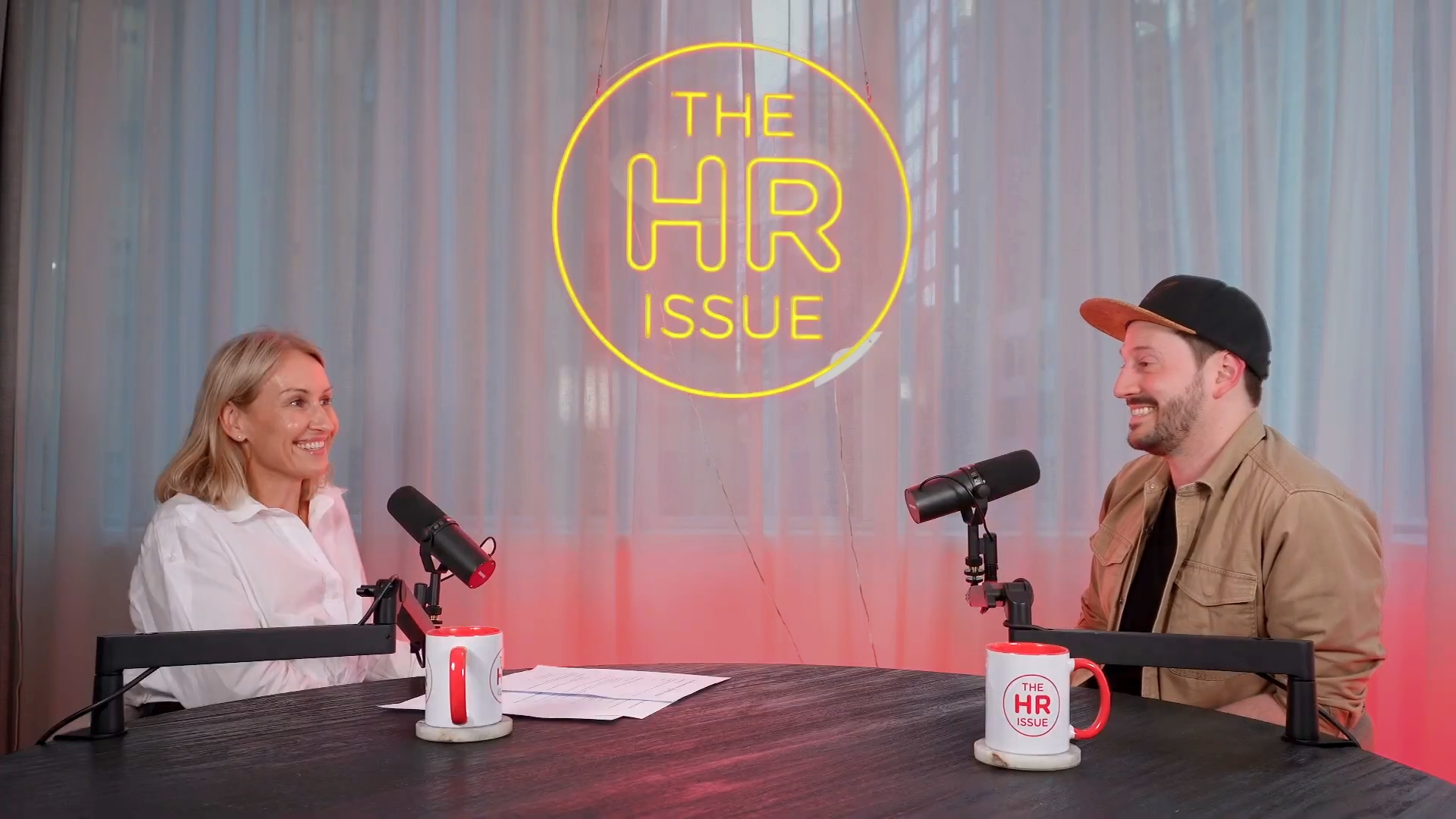
That idea was central to our final season three episode of The HR Issue Podcast, where host Kylie Terrell explores with Naz what Funlab can teach other organisations about workplace culture, employee engagement, and creating more human workplaces.
FREE RESOURCE: Your 2027 HR Calendar
Fun at work starts with intention
For Naz, workplace enjoyment is not about waiting for fun to happen accidentally. It requires attention and intention.
“I make a really conscious effort to find the joy, find the fun in any situation,” he says.
That joy is often found in small moments: a conversation with a colleague, a shared laugh, a brainstorming session, or a brief break from a demanding task.
“For me, it’s the little moments and also where it’s just able to have some gratitude and savour things throughout the day,” Naz explains.
Employee engagement isn't built only through major events or large-scale workplace initiatives, it's also shaped by the everyday experience of work. If employees are constantly focused on deadlines, pressure, and competing priorities, they may not naturally create opportunities for connection. Leaders therefore need to design a workplace where those moments can happen.
“Sometimes, if we just count on finding the joy being really accidental, then we might just get swept up.”
At Funlab, creating enjoyable moments is part of the organisation’s broader approach to employee experience. Those moments might include a team celebrating a big sale, colleagues stepping away from their desks to share ideas, or department heads appearing in costume with a drinks trolley.
“We take fun seriously,” Naz says.
Workplace culture cannot be copied and pasted
One of the most important lessons from Funlab is that there's no universal formula for building a positive workplace culture.
“I don’t think there’s any one way or thing that you take and then it’s auxiliary and you just plug it in and then that creates the fun for that environment,” Naz explains.
A workplace initiative that creates energy in one organisation may feel artificial or uncomfortable in another. The same is true of office design, employee events, leadership rituals, and communication styles.
The goal is not to copy Funlab’s culture. It's to understand your own people, purpose, and operating environment, then create practices that are authentic to your organisation.
At Funlab, culture is made visible from the start in the recruitment process. Candidates experience the organisation’s personality early, including through first-round interviews conducted in costume.
“Whether it’s a brand new team member in their first ever job or it’s someone that’s joined the executive team, for every role, we dress up in costume,” Naz says.
This provides candidates with a realistic view of the organisation. For some people, it will be exciting. For others, it may help them recognise that Funlab is not the right environment for them.
“That’s something that’s going to be really attractive for some people, and for other people they’re going to be like, ‘Is that the kind of workplace that I’m signing up for? And so that’s okay.”
Rather than presenting an idealised version of company culture, organisations can use recruitment to show candidates what the employee experience is genuinely like.
Culture belongs to everyone, not just HR
Although Naz’s role focuses on culture and engagement, he's clear that culture cannot be owned by one person or department.
“We’ve actually intentionally avoided having the word culture in anyone’s title up until very recently for the reason that it’s no one’s role,” he says.
“I’m not a culture manager. I don’t manage the culture. Everyone contributes to the culture equally.”
HR teams can create systems that influence workplace culture, including recruitment, onboarding, leadership development, recognition, and employee listening. However, culture is ultimately created through everyday behaviour across the organisation.
Every leader, manager, and employee contributes to it.
At FunLab, this shared responsibility is introduced during onboarding through an experience called Funcademy. The program focuses on three core areas:
- People
- Guests
- Performance
The objective is not to give employees a rulebook for every possible situation. Instead, it gives them a framework for making decisions when the answer is not obvious.
“We really bang on about the importance of recruitment because everyone who enters the business… experiences recruitment,” Naz explains. “The next most important thing is onboarding because everyone who’s here is going to go through that phase as well.”
A strong onboarding experience helps employees understand not only what they need to do, but why it matters. That context supports better judgement, stronger decision making, and a clearer connection to the organisation’s purpose.
Employee autonomy requires trust
In a customer-facing business, employees regularly encounter situations that cannot be predicted in advance. No handbook can account for every guest interaction, operational challenge, or team dynamic.
“You don’t know what the day holds,” Naz says. “And so you get really good at being resilient, adaptable, and thinking on your feet and [owning] your own decision making.”
That's why employee autonomy is so important. People need the authority and confidence to make appropriate decisions without waiting for approval at every stage.
However, autonomy doesn't mean leaving people unsupported. It requires clear expectations, good onboarding, ongoing feedback, and a level of psychological safety that allows people to learn.
Naz says Funlab acknowledges from the outset that mistakes will happen:
“Part of what success looks like is that we know you’re going to make mistakes. You should expect that there’s going to be feedback because we are really feedback heavy.”
This reflects a healthy approach to learning and performance. Mistakes should be addressed, but they shouldn't automatically be treated as failures of character or commitment.
For organisations looking to improve employee engagement, this is a critical distinction. Employees are more likely to contribute ideas, take initiative, and make decisions when they believe they can learn from mistakes rather than being punished for every misstep.
Making feedback memorable with the “give a bird” model
Funlab has developed a memorable approach to feedback known as “giving a bird.”
The name is deliberately playful, but the underlying process is structured and practical. It helps managers provide feedback that is specific, balanced, and focused on future performance.
The model includes five steps:
- Ask – Ask whether the person is open to receiving feedback.
- Behaviour – Describe the specific behaviour that was observed.
- Impact – Explain the impact of that behaviour.
- Responsibility – Give the employee ownership of what happens next.
- Document – Record the conversation and agreed commitment.
The model was introduced because Funlab found that traditional feedback frameworks were not always being used in practice. “It wasn’t the content, it’s just that it wasn’t getting put into practice,” Naz says.
The playful language helped make the process easier to remember and more likely to become part of everyday workplace communication. The model also encourages managers to focus on observable behaviour rather than vague judgements about attitude or personality.
“Sometimes when we’re giving feedback, I think we’re focused on the attitude rather than addressing the specific behaviour. And if you don’t do that, then it dances around.”
This is particularly important for managers who are new to leadership. At Funlab, many managers are leading people for the first time, including former peers and friends. A clear feedback model gives them a structure to rely on when conversations feel uncomfortable.
Recognition is an underrated performance tool
The episode also highlighted the importance of employee recognition. While organisations often focus heavily on corrective feedback, Naz believes positive recognition is just as important for improving performance and engagement.
The risk is that employees may not realise which behaviours are helping the team or contributing to a positive guest experience. “They might not even realise that they’re doing the right thing,” Naz explains.
Effective recognition should be specific. Rather than simply saying “great job,” leaders should identify the behaviour, explain the impact and make it clear why the contribution mattered.
Naz offers an example of the difference between vague and meaningful recognition. Instead of saying, “Thanks, it was really busy,” a manager could say: “When I was busy over here and you took the initiative and you were proactive and you communicated with those other people, I was able to just know that you were completely on top of it, and I appreciate you so much.”
This kind of feedback gives employees a clear understanding of what to repeat.
Naz also draws an important distinction between recognition, rewards, and awards. Recognition doesn't need to be expensive or limited. It can happen frequently and authentically, without being tied to a formal awards program.
“There’s no quota,” he says. “It’s like, ‘Oh, sorry, I spent all my recognition.’”
Recognition is most effective when it's timely and personal. Some employees may appreciate public acknowledgement, while others may prefer a private conversation or message.
The important thing is to understand the individual and avoid assuming that everyone experiences recognition in the same way.
Small workplace wellbeing initiatives can have a big impact
One of the most practical examples discussed in the episode was Funlab’s approach to coffee.
The organisation deliberately placed its coffee machine away from employees’ desks. This encourages people to leave their workstations, take a break, and interact with colleagues.
“It also means that you’re able to plan for accidental moments,” Naz says.
FunLab also supports coffee walks, where employees can walk to a café and charge the coffee to the organisation. These walks create a natural opportunity for one-on-one meetings, fresh air, and informal conversation.
“One-on-one meetings end up becoming walks along the Yarra River,” Naz explains. “They break away from the day to day, which is often better for having those kind of meetings and conversations and rapport building.”
This is a useful example of a simple workplace wellbeing initiative that doesn't require an elaborate budget or complicated technology. A small amount of intentional design can encourage movement, connection, and more meaningful conversations.
Naz describes this as useful “friction.” If something is too easy or too convenient, people may not pause to connect. A little extra effort can create a more valuable experience.
Creating connection in a hybrid workplace
Funlab’s approach to hybrid work is also based on intentionality.
The organisation doesn't view office days simply as an attendance target. Instead, the focus is on how people can make the best use of their time together.
“If that just meant that we were just pushing all of our meetings into physical rooms, if that’s not actually optimal, then that’s not going to be better off,” Naz says.
Being in the same physical space doesn't automatically create collaboration. If employees spend the entire day in separate meetings or working independently, the opportunity for connection may be lost.
Funlab therefore creates space for shared lunches, celebrations, awards, activities, and informal rituals. The support office also pauses each Wednesday to share positive guest experiences from across the organisation’s venues. This practice helps employees in non-customer-facing roles understand how their work contributes to the guest experience.
“It’s also important for us where we’re not directly interacting with guests… to know the impacts that we’re having.”
The lesson here is that hybrid work should be designed around purpose. Employees should understand why they're coming together and what they can achieve collectively that would be harder to achieve separately.
Measuring workplace culture through action
Like many organisations, Funlab uses engagement surveys and other metrics to understand employee sentiment. However, Naz doesn't believe a single score can tell the full story of workplace culture.
“We are keeping our finger on the pulse with those metrics, but it’s really to understand change and what is coming through in the results rather than it as a score.”
FunLab also looks at behavioural indicators, including participation in initiatives and how employees use shared spaces.
However, low participation doesn't automatically mean an initiative has failed. It may indicate a communication problem, an onboarding gap, or a belief among employees that they aren't allowed to take time away from their desks.
Metrics can provide useful signals, but leaders need to investigate what sits behind them.
“I think it’s the action plans and the follow-through that comes from the surveys. The actual rubber hitting the road, that’s the actual measure of engagement.”
This is a valuable reminder that employee listening only creates value when it leads to action. Surveys, focus groups, and pulse checks should be starting points for improvement, not substitutes for it.
Culture can create a tailwind for business performance
The idea that culture is a business driver runs throughout the episode, Naz challenges the perception that culture is simply a “nice to have.”
“Every business has a culture,” he says. “So how much you put into that, how you tend to that is completely up to you.”
He describes culture as either a tailwind or a headwind: “It’s either going to be an immense force that is a wind in your sails or it’s going to be headwinds.”
When an organisation’s stated values, everyday employee experience, and business objectives are aligned, people can make decisions quickly and work towards a shared goal.
“When you’re aligning the explicit culture and the implicit culture with the actual organisational objectives, then you’re going to be moving really fast and in the direction that you’re wanting to go.”
This is why workplace culture should be considered alongside strategy, performance, and customer experience. It influences how employees behave when leaders aren't present, how teams respond to pressure, and whether people feel empowered to solve problems.
Final takeaways from Funlab’s approach to workplace culture
Naz’s perspective offers several practical lessons for HR and people leaders:
- Make your culture visible during recruitment.
- Treat onboarding as a key culture-building opportunity.
- Give employees principles that support decision making.
- Build trust by allowing people to learn from mistakes.
- Use a consistent and memorable feedback framework.
- Recognise specific behaviours and explain their impact.
- Tailor recognition to the individual.
- Create simple opportunities for connection and wellbeing.
- Make in-person time purposeful.
- Use engagement data as a signal, not a final answer.
- Remember that culture belongs to everyone.
Perhaps the most memorable takeaway from the episode is Naz’s observation:
“You could be doing any job in the world, but it’s who you’re doing it with.”
A strong workplace culture isn't created by one policy, program, or perk. It's built through the everyday experiences that tell employees whether they're trusted, supported, valued, and connected to a larger purpose.
And while Funlab’s approach is full of energy and personality, its underlying principles can apply to any organisation: be intentional, make space for connection, give people autonomy, and recognise the contribution they make.
Want to hear more insights from Australian HR leaders? Catch up with previous podcast episodes below!