What Australian companies can learn from the world’s most joyful workplaces
Discover what high-joy workplaces appear to have in common, where lower-joy workforces may be struggling, and what Australian employers can do to improve the employee experience.


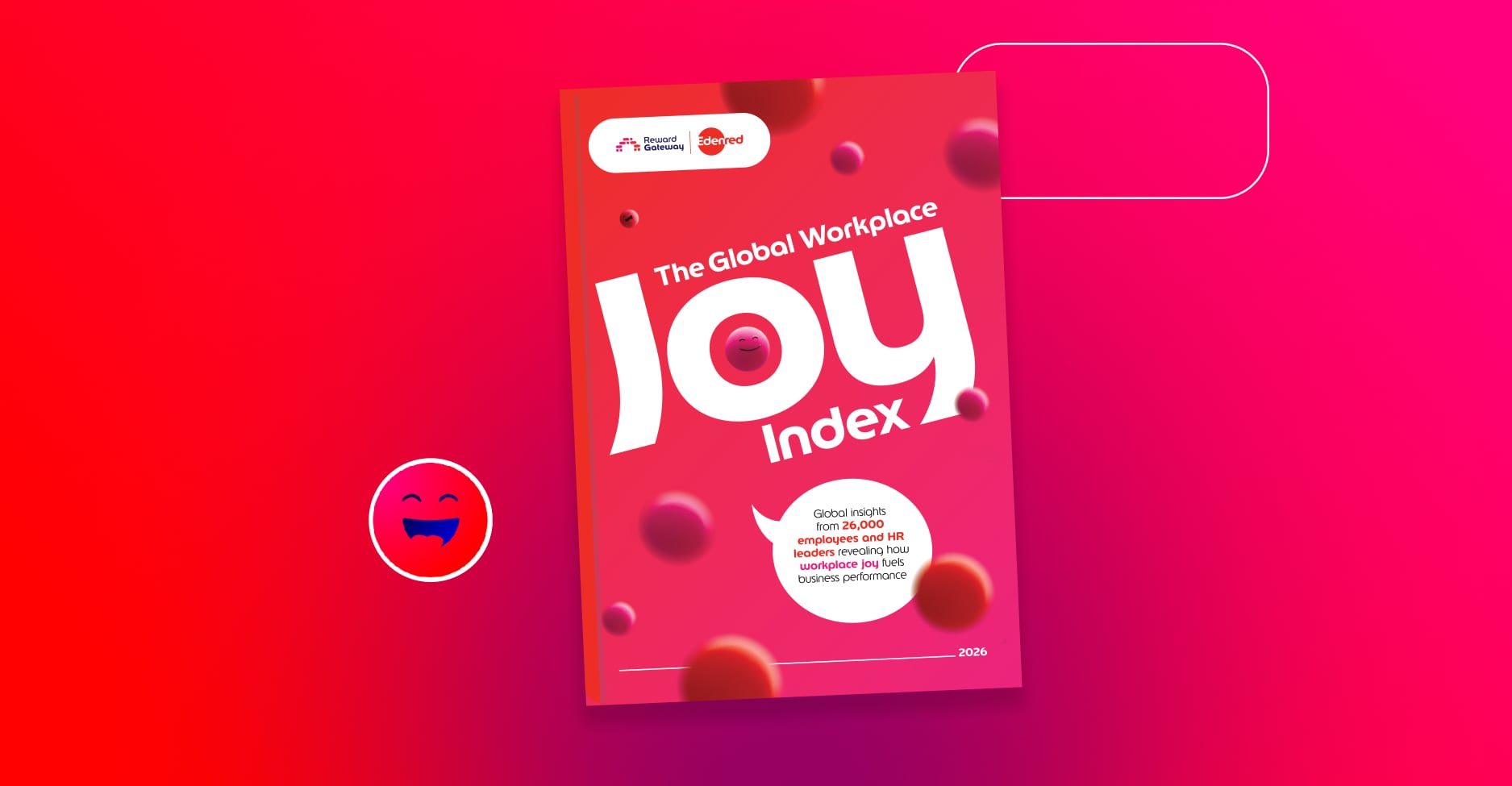
Workplace joy is not evenly distributed around the world. The latest findings from The Global Workplace Joy Index, based on the views of 17,450 employees and 8,920 HR leaders across 27 countries, reveal significant differences in how people experience work. The global Joy Index ranges from 73 in India to 47 in Japan, with Australia recording a score of 60 — below the global average of 63.
These differences don't mean that one country has discovered a universal formula for workplace happiness, or that another has failed. Workplace joy is influenced by culture, expectations, economic conditions, leadership, relationships, and the everyday realities of work.
However, the data does reveal useful patterns. It shows what high-joy workplaces appear to have in common, where lower-joy workforces may be struggling and what Australian employers can do to improve the employee experience.
SEE THE FULL REPORT: The Global Workplace Joy Index
The global workplace joy divide
The Global Workplace Joy Index measures ten dimensions of working life, including energy, enthusiasm, pride, purpose, connection, appreciation, burnout, frustration, engagement and likelihood to recommend an employer.
Across the countries surveyed, the results are highly varied with India leading at 73, followed by Mexico and Peru at 72. Brazil records 70, while the USA sits at 68. Australia scores 60, alongside Poland, and below the UK at 62. Japan records the lowest score at 47, with 54% of Japanese workers reporting low joy.
The spread between the highest and lowest countries is substantial. But the results should not be interpreted as a simple league table of good and bad workplaces. Cultural response styles, economic momentum, expectations, and labour market conditions all influence how people report their experience.
The more useful question is: what can the patterns tell us about the conditions that help workplace joy grow?
High-growth markets lead the Joy Index
India, Mexico, and Peru are among the highest-scoring markets in the study. Several factors may help explain this pattern. Workers in fast-growing economies may be experiencing rising wages, greater upward mobility, and a stronger sense of progress.
In India, for example, projected salary increases and real wage growth may be contributing to a more optimistic outlook. Across parts of Latin America, minimum wage increases have been running ahead of inflation, helping to restore purchasing power and support consumer confidence.
These economic conditions don't explain everything. Higher joy is also associated with stronger workplace relationships and a more collective approach to work and community. Employees in markets where connection and social belonging are deeply embedded may have a cultural head start on some of the factors that help people experience work positively.
The report describes this as an important distinction. Workplace joy is not simply a reflection of absolute prosperity or working conditions. It can also reflect momentum, expectations, and how closely people’s work connects with the wider social environment around them.
For Australia, this raises an important question: are organisations creating enough connection and shared purpose to support joy, particularly in increasingly distributed and individualised working environments?
Australia sits below the global baseline
Australia’s Joy Index score of 60 places it below the global average of 63. This score is shaped by a workforce in which moderate joy is much more common than high joy:
- 54% of Australian workers report Medium Joy.
- 28% report Low Joy.
- Just 19% report High Joy.
This suggests that many Australian employees are not necessarily experiencing work as wholly negative. Instead, joy may be inconsistent, present in some moments or parts of the employee experience, but not strong enough to define the overall working life.
That distinction matters. A workforce can have acceptable engagement levels while still lacking the energy, appreciation, connection, and sense of purpose that characterise High Joy workplaces.
The biggest Australian warning sign is the perception gap
The most notable finding from our Australian insights is the gap between employee experience and leadership perception:
-
Australian workers rate their workplace joy at 6.1 out of 10.
-
HR leaders estimate that workers experience joy at 7.8 out of 10.
-
That is a 1.7-point gap, the largest gap recorded in this study.
Globally, HR leaders estimate employee joy at 7.6, compared with a worker rating of 6.6 — a gap of 1.0 point.
The comparison with higher-scoring markets is revealing. India and Latin America have the highest Joy Index scores and the narrowest perception gaps:
- South Asia: +0.80
- Latin America: +0.83
The data doesn't suggest that Australian HR leaders don't care about employee experience. Rather, it suggests that leaders may be operating with an incomplete or overly positive view of how work feels day to day.
This can happen for several reasons:
- Employees may be reluctant to share concerns openly.
- Senior leaders may hear more positive feedback than frontline or less visible employees.
- Annual surveys may not capture rapid changes in sentiment.
- Organisational averages may conceal differences between teams.
- HR leaders may measure whether a process exists without measuring how employees experience it.
Whatever the cause, the practical lesson is clear: improving workplace joy starts with improving the accuracy of the employee experience picture.
High Joy workers have more than positive sentiment
High Joy workers aren't simply reporting greater day-to-day joy. They also show stronger relationships between joy and the outcomes organisations care about.
High Joy workers are significantly more likely to:
- Expect to stay with their employer
- Feel more productive than they did 12 months ago
- Recommend their organisation as a place to work
- Feel connected to colleagues
- Feel valued and appreciated
- Experience a sense of purpose and meaning
The retention difference is particularly striking:
- 94% of High Joy workers expect to stay with their employer for the next 12 months.
- Only 63% of Low Joy workers say the same.
There is a similarly large difference to productivity:
- 73% of High Joy workers feel more productive than they did a year ago.
- Just 27% of Low Joy workers say the same.
Australia reflects this global pattern. Among Australian workers who feel more productive, 68% are High Joy workers, compared with just 29% who are Low Joy workers.
This doesn't mean that joy is the only driver of productivity or retention. But it does show that employee experience and workplace joy is closely connected to both. Organisations that overlook joy may also be overlooking important signals about workforce stability and performance.
What keeps people in High Joy workplaces?
Our global research reveals an important distinction between why people stay and why they leave. People generally stay because they:
- Enjoy their work
- Feel secure in their job
- Like the people they work with
- Have a good work-life balance
Pay only just makes the top five reasons for staying.
When employees consider leaving, however, pay moves to the top of the list. Other common reasons include feeling undervalued and dissatisfaction with leadership.
This suggests that retention is built through the overall quality of work, but can be undermined by specific points of friction.
Australia shows the same pattern. Among Australian workers unlikely to stay, the leading reasons include:
- Better pay: 36%
- Dissatisfaction with management or leadership: 33%
- Limited opportunities for progression: 32%
- Not feeling valued or recognised: 32%
High Joy workplaces therefore don't necessarily retain people by offering the highest salary. They create an experience that gives employees clear reasons to remain, through meaningful work, supportive relationships, recognition, and opportunities to grow.
Recognition is a common high-impact lever
Recognition is one area where the global and Australian findings point to a strong practical opportunity.
Globally, only 18% of workers receive formal or informal recognition from their manager at least three times a month.
Yet moving from no recognition to one instance per month is associated with a major shift:
- The proportion likely to stay rises from 73% to 86%.
- The proportion who feel more productive rises from 34% to 57%.
In Australia, 29% of workers say recognition was one of the moments of joy that had the biggest impact on them.
There is also a clear relationship between recognition frequency and joy:
- Among Australian workers who received no recognition from their manager in the previous month, 42% are Low Joy workers.
- Among those recognised by their manager three to five times, around one in three are High Joy workers.
- Only 7% of this regularly recognised group are Low Joy workers.
Despite this, recognition remains relatively underused in Australian organisations:
- 21% say their organisation provides regular recognition from managers.
- 22% say it encourages peer-to-peer appreciation.
The lesson from higher-joy workplaces is not that recognition needs to be expensive or elaborate. It needs to be regular, meaningful, and connected to the contribution someone has made.
Benefits support the conditions for joy
Benefits are another factor associated with higher workplace joy.
Globally, High Joy workers receive an average of five benefits, compared with three among Low Joy workers.
Every benefit category included in the research is associated with a Joy Index score above the global average. The highest-scoring categories include:
- Financial wellbeing tools: 71
- Employee reward programs: 70
- Employee recognition programs: 70
- Remote work expense support: 69
- Learning and development: 69
- Health and wellbeing programs: 68
The research suggests that benefits operate as an ecosystem. Different benefits address different employee needs:
- Financial benefits help reduce everyday pressure.
- Flexible working helps employees manage competing priorities.
- Wellbeing support helps protect physical and mental health.
- Learning and development supports progression and purpose.
- Recognition reinforces value and appreciation.
Australian workers identify flexibility, growth and learning, positive culture and good benefits as the leading ways their organisations enable workplace joy.
However, recognition ranks lower:
- Flexibility in how and when people work: 32%
- Growth and learning opportunities: 31%
- Positive company culture: 30%
- Good employee benefits: 28%
- Regular recognition from managers: 21%
Australian organisations appear to be investing in several important foundations of joy, but may not yet be combining them into a consistent everyday experience.
Belonging is a defining feature of high joy
The data also shows that high-joy workplaces are places where people feel connected and able to be themselves.
Globally:
- 94% of High Joy workers report a strong sense of belonging, compared with 33% of Low Joy workers.
- 93% of High Joy workers feel comfortable being their authentic selves, compared with 38% of Low Joy workers.
In Australia:
- 70% of workers say they can be their authentic self at work.
- 73% say they feel that they belong and are part of a team.
Among High Joy workers, these figures rise to:
- 94% who feel able to be their authentic self.
- 96% who feel they belong and are part of a team.
These differences suggest that workplace belonging is not simply a cultural aspiration. It's closely connected to how employees experience their work.
However, belonging cannot be created through social activities alone. Employees also need to trust leadership. Globally, trust in senior leaders shows one of the largest differences between joy groups:
- 85% of High Joy workers trust their senior leaders.
- Only 16% of Low Joy workers say the same.
Australian organisations therefore need to focus on both sides of belonging: the quality of relationships among colleagues and the credibility of leadership.
What Australia can learn from High Joy workplaces
The global findings don't offer a single model that Australia can copy. India, Mexico, Peru, Australia, and Japan operate within very different cultural and economic environments. But they do highlight several principles that Australian organisations can apply:
1. Build connection into everyday work
High Joy workplaces appear to benefit from strong relationships and a sense of community.
Australian employers can strengthen connection by creating more opportunities for collaboration, peer support, and team belonging, particularly for remote, hybrid, frontline, and distributed workers.
2. Listen beyond the average
Australia’s perception gap highlights that leaders need to understand how different groups experience work. Employee listening should be segmented by role, team, location, age, seniority, and working arrangement. A single engagement score may hide important differences.
3. Make recognition frequent and inclusive
Recognition shouldn't be reserved for major achievements or high-profile employees. It should become a regular part of how managers lead and how colleagues acknowledge one another. Small, timely moments can help reinforce belonging and make contributions visible.
4. Treat benefits as a connected system
Benefits should address both immediate and longer-term needs, from financial wellbeing and flexibility to development and health support. The goal isn't to provide the longest list of benefits, it's to provide support that employees can use, understand, and value.
5. Strengthen leadership trust
Employees need to believe that leadership is honest, capable, and responsive. Clear communication about business decisions, greater transparency, and visible follow-through can help narrow the gap between leadership intent and employee experience.
6. Combine future planning with present-tense listening
Australian HR leaders are focused on development, wellbeing, AI, culture, and other future-facing priorities. These priorities are important, but organisations also need to understand what employees are experiencing now. Planning for the future should happen alongside regular checks on morale, workload, recognition, trust, and belonging.
What Australia can learn from Low Joy workplaces
The results from lower-scoring markets, particularly Japan, shouldn't be treated as a simple warning about national culture. The report notes that Japanese workers may be less likely to choose extremely positive survey responses due to cultural norms around humility and social caution. At the same time, Japanese workers may also be navigating long working hours and stronger workplace hierarchies.
The lesson for Australia isn't to draw simplistic conclusions from a single country’s score, it's to look at the different factors that can suppress joy:
- Excessive workload
- Limited autonomy
- Weak recognition
- Poor communication
- Low trust in leadership
- Lack of progression
- Inadequate work-life balance
- A culture where employees don't feel safe expressing concerns
These factors can exist in any market, including Australia. They may be expressed differently depending on cultural expectations and survey response styles, but the underlying employee experience still matters.
Australia’s workplace joy score may sit below the global average, but the research also shows that the levers for improvement are within reach.
A more joyful future of work
The world’s highest-scoring workplaces are not necessarily joyful because they have one perfect benefit, one ideal leadership model, or one universal cultural advantage.
They appear to share something more fundamental: employees are more likely to feel connected, supported, valued, and optimistic about their working lives.
That experience has measurable business consequences. High Joy workers are more likely to stay, feel productive, and recommend their employer.
For Australia, the opportunity is to learn from the global patterns without losing sight of local realities.
Workplace joy is not created through grand gestures alone. It's built through repeated, everyday experiences: being informed, recognised, supported, trusted, and given opportunities to grow.
The organisations that focus on these fundamentals will be better positioned not only to improve how work feels, but also to strengthen retention, productivity, and long-term performance.
Discover how Reward Gateway | Edenred’s benefits and engagement solutions can help you create a more connected, supported, and joyful workplace.