How a 2027 HR calendar can simplify employee engagement planning
Discover how a 2027 HR calendar can simplify employee engagement planning, helping Australian and New Zealand HR teams organise key dates, communications, wellbeing initiatives, and recognition moments.


HR teams are constantly balancing competing priorities. There are managers to support, communications to plan, employee feedback to respond to, and important moments to recognise throughout the year.
With so much happening, employee engagement planning can easily become another task competing for attention. Even when teams have strong ideas, there isn’t always enough time to bring them together into a clear, manageable plan. A 2027 HR calendar can help simplify that process.
By bringing key dates, timely ideas, and practical prompts into one place, an HR calendar gives people teams a clearer view of the year ahead. It can help them prepare earlier, coordinate activity, involve managers, and create a more consistent employee experience across their organisation.
Want to start planning for 2027? Download our free 2027 HR Calendar now.
Bring important moments into one place
Employee engagement activity often sits across multiple plans and teams. Recognition may be managed separately from wellbeing, internal communications, inclusion, benefits, and manager development.
When these activities aren’t viewed together, it’s difficult to see how they fit into the broader employee experience. Teams may miss useful connections, duplicate efforts, or find themselves managing too many initiatives at once.
A calendar creates a shared view of what’s coming up. It gives HR and People teams a practical way to map important moments across the year and decide where to focus their time.
This might include:
- Key awareness days and observances
- Public holidays and seasonal moments
- Recognition and rewards opportunities
- Wellbeing initiatives
- Manager communications
- Employee listening activities
- Planning milestones for larger campaigns
Having this information together makes it easier to prioritise and create a more balanced rhythm across the year.
Create breathing room for your team
One of the biggest benefits of planning ahead is that it creates breathing room.
When an important date is only a few days away, there’s limited time to develop a thoughtful campaign, involve stakeholders, prepare managers, or create useful communications. The focus naturally shifts to getting something out the door as quickly as possible.
An HR calendar gives teams an earlier prompt to start thinking about what’s needed. That extra time can make it easier to:
- Clarify the purpose of an initiative
- Decide who needs to be involved
- Prepare content and communications
- Give managers enough notice
- Choose the right channel
- Consider how success will be measured
For example, HR teams could begin their employee engagement planning for Employee Appreciation Day in January, well before the March awareness day two months later. This forward thinking helps turn a single event into a more considered recognition opportunity, rather than something that needs to be organised at the last minute.
Make engagement more consistent
A strong employee experience isn’t created through one or two major campaigns. It’s shaped by the regularity and relevance of the moments employees experience throughout the year.
Recognition needs to happen beyond formal annual awards. Wellbeing support needs to be more than an annual campaign. Communication needs to be regular, useful, and easy to access. Managers need opportunities to check in with their people consistently.
An HR calendar can help create that rhythm.
It doesn’t mean filling every month with activity. Instead, it helps teams identify where a timely prompt, communication, or initiative could support employees and reinforce broader people priorities.
This makes engagement feel less like a series of disconnected events and more like an ongoing part of the employee experience.
Help managers prepare to support their teams
Managers play a central role in how employees experience the workplace, but they can’t be expected to support every initiative without preparation.
If managers only hear about a campaign when it launches, they may not have enough context to explain its purpose, encourage participation, or lead meaningful conversations with their teams. Their involvement can become a delivery task, rather than an opportunity to strengthen engagement.
An HR calendar can empower people teams to involve managers earlier, giving them:
- Advance notice of upcoming activity
- Context about why a particular moment matters
- Conversation prompts to use with their teams
- Clear actions to support participation
- Access to relevant resources and guidance
Connect key dates to practical action
Knowing that an awareness day or observance is approaching is useful, but the date itself isn’t the outcome.
The more important question is: what could this moment mean for employees, and how can the organisation respond in a relevant way?
A calendar can help teams move from simply marking a date to planning an appropriate action. That action might be a communication, a manager guide, a recognition activity, a learning opportunity, or a reminder about available support.
Plan communications with more purpose
Internal communication is more effective when it’s timely and connected to employee needs.
Without a shared planning view, communications can become reactive. Teams may send messages too close together, miss opportunities to reinforce important information, or struggle to give employees enough notice about upcoming activity.
An HR calendar or shared people planner can help communications teams plan content more intentionally.
It can support a balance of:
- Timely reminders
- Employee stories
- Recognition spotlights
- Wellbeing resources
- Manager updates
- Benefits communications
- Campaign launches
- Follow-up reminders
Planning ahead also makes it easier to adapt content for different audiences. Managers may need practical guidance, while employees may need a concise explanation of what’s available and why it matters.
The result is communication that feels more coordinated, rather than a series of unrelated announcements.
Use data to decide where to focus
Planning doesn’t mean setting the entire year in stone. Employee needs can change, and HR teams need to remain responsive.
That’s why a useful calendar should work alongside employee feedback and engagement data. The calendar can show what’s coming, while analytics and listening tools can help determine what deserves the most attention and what needs to evolve as the year progresses.
Leverage analytic tools to make the most of real-time dashboards, segmented reporting, and AI-powered insights to understand what employees are experiencing and where to act next.
This can help HR teams:
- Identify where engagement is strongest
- Spot teams that may need additional support
- Understand engagement differences across roles or locations
- Respond to employee feedback more quickly
- Adjust plans based on what the data is showing
The calendar provides structure, while data helps teams make informed choices within that structure.
Make everyday support easier to access
Employee engagement planning isn’t only about campaigns and events, it’s also about making everyday experiences simpler for employees.
People often have questions about leave, policies, processes, benefits, or workplace support. If they don’t know where to find the answer, they may need to contact HR or search across several systems.
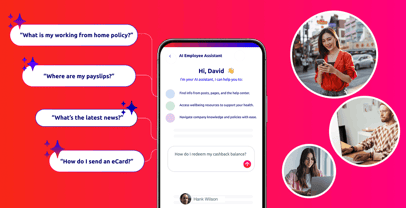
AI Assistant is one way to reduce this everyday friction. It can help employees find fast, relevant answers to common questions while easing the administrative burden on HR and People teams. This reflects a broader shift in employee engagement. The aim isn’t simply to create more activity. It’s to make support more accessible, responsive, and useful in the moments employees need it.
Get ahead of seasonal pressure points
Some periods of the year require more preparation than others. End-of-year recognition, rewards, festive communications, and employee support can all become difficult to manage if planning starts too late.
A calendar helps make those lead times visible. It can prompt teams to start planning before activity becomes urgent, giving them more time to:
- Confirm budgets
- Choose rewards
- Prepare communications
- Brief managers
- Coordinate suppliers
- Promote employee benefits
- Plan coverage during holiday periods
This is particularly important for smaller HR teams, which may not have the capacity to manage several last-minute projects at once.
Make the calendar work for your organisation
An HR calendar is a starting point, not a complete engagement strategy. Its value comes from how teams use it.
To make it practical, HR professionals can:
- Review the dates and themes most relevant to their workforce
- Identify the moments that need the most preparation
- Connect each moment to a clear employee or business priority
- Decide which teams and managers need to be involved
- Build communications and follow-ups into the plan
- Review engagement data and feedback throughout the year
- Adjust activity as employee needs change
This approach keeps the calendar useful without making it restrictive. Teams can plan ahead while still leaving room to respond to what’s happening across the organisation.
A simpler way to plan your 2027
The value of a 2027 HR calendar isn’t just that it helps people teams remember important dates. It helps them make better use of their time.
It brings activity into one view, creates earlier prompts, supports manager involvement, encourages more consistent communication, and helps teams connect key moments to practical employee needs.
For HR professionals across Australia and New Zealand, it can provide a simple foundation for planning recognition, wellbeing, inclusion, communication, manager support, and employee engagement throughout the year.
The aim isn’t to do more for the sake of it. It’s to make the moments that matter easier to plan, more relevant to employees, and more connected to the wider employee experience. Access the 2027 HR Calendar now.
Ready to simplify your employee engagement planning? Chat to our team to explore how Reward Gateway | Edenred can help you create more connected, consistent, and engaging experiences for your people.