What is a deskless worker?


Deskless workers make up roughly 80% of the global workforce, a massive population spanning industries like manufacturing, healthcare, retail, hospitality and field services.
In this blog, we’ll define what “deskless” really means, share examples and key characteristics, outline the top challenges facing this group and explore how supporting deskless workers differs from supporting remote or hybrid teams. We’ll finish with practical steps HR leaders can take to better engage, support and retain this critical workforce.
What is a deskless worker?
A deskless worker is someone whose job doesn’t require a permanent workstation or desk and is typically carried out on-site (like warehouses or factories), directly with customers (like food service or retail) or while mobile (like long-distance driving or delivery). The work is hands-on and location-dependent, and can’t be performed from a traditional office desk or remote setup. What defines “deskless” is the nature of the work itself – not whether someone is full-time, part-time or working shifts, nor even “hot desking” office environments where work stations are shared.
 Common examples of deskless workers
Deskless workers are everywhere. Common roles include:
- Manufacturing and logistics: Assembly line workers, warehouse operatives, delivery drivers
- Healthcare: Nurses, home health aides, paramedics
- Retail and hospitality: Store associates, hotel housekeepers, restaurant servers
- Field services and skilled trades: Electricians, plumbers, construction labourers, maintenance technicians
What's the difference between deskless and frontline workers?
While often used interchangeably, deskless and frontline describe different aspects of a job. Deskless refers to where the work is done (away from a computer or office), while frontline refers to what the work entails (working directly with customers or delivering core services).
Deskless worker: Defined by their location or lack of a fixed workspace. These employees do not sit at an office desk or company laptop, but instead work on the move, in the field, or on a production floor.
Frontline worker: Defined by their business value and interaction. They are the "face" of an organisation who engage directly with customers, patients, or the public, playing a pivotal role in brand perception and core service delivery.
These terms have significant overlap, but they are not identical.
Both deskless and frontline: Retail associates, restaurant servers, nurses, and delivery drivers. They are on the move and interacting directly with customers or patients.
Deskless, but not frontline: Maintenance technicians, construction workers, and warehouse employees. They do not have fixed desks, but they do not primarily interact with customers.
Frontline, but not deskless: Customer support agents working in call centres, or bank tellers. They engage directly with customers, but they do so from a fixed, desk-based workstation.
Key characteristics of deskless work
While every organisation is different, deskless roles tend to share a few traits:
- No fixed office or workstation: Work happens on a shop floor, in a store, on the road or at a customer site
- Limited access to traditional digital tools: Standard corporate channels (like intranet sites or email) may not reach these employees at the right time or place
- Shift-based or hourly schedules: Coverage needs often drive scheduling complexity
- Frontline-first communications: Information is best delivered via mobile or frontline-specific platforms rather than desktop-heavy tools
Challenges deskless workers face
From the employee experience perspective – and the HR lens – several pain points show up frequently.
 Communication and information gaps
When employees aren’t at a desk, timely updates can get lost. They miss the quick Slack message, the all-staff email or a desktop alert, which leads to confusion and uneven execution across locations.
Improving communication isn’t just a “nice to have”: Transparent communication boosts trust, and trust drives performance.
Lack of recognition and visibility
Deskless employees often do great work out of sight of managers and headquarters teams, so their contributions can fly under the radar. That’s a missed opportunity – formal, technology-enabled recognition is a cost-effective way to improve motivation and productivity, with most employees saying recognition motivates them to work harder.
High turnover and retention challenges
Feeling disconnected or overlooked adds up to dissatisfaction and flight risk, which is why engagement and turnover can be higher in frontline populations. Retention improves when employees feel informed, appreciated, and supported with the right tools and benefits.
Unequal access to training and development
Without a desk, learning often takes a back seat. Traditional training approaches assume time, space, and login access that frontline teams don’t always have. Yet training is essential to engagement and performance – coaching-based development can significantly improve manager effectiveness.
 How to support and engage deskless workers
There’s no single silver bullet, but a few proven strategies can make a big difference.
1. Use mobile-first tools
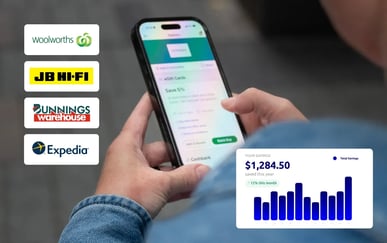
Meet people where they are – on their phones. A mobile-first employee experience puts communications, recognition, benefits, and resources in everyone’s pocket, which is crucial for frontline and on-the-go teams. Consider a unified platform and an employee app to keep updates, policies, and recognition accessible on the move.
Want to see this in action? Check out our success story with O'Brien, who doubled recognition in one year and saw a 3.6x increase in eCard usage across its auto and glazing frontline teams.
2. Make recognition accessible and inclusive
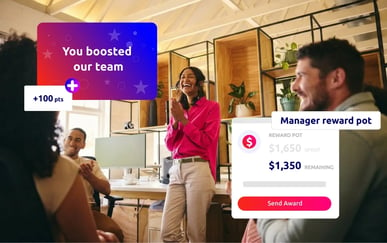
Build a recognition habit that spans locations and shifts. Formal recognition programs supported by technology help managers and peers highlight wins in real time. Employees report that recognition motivates stronger performance, even without a reward – and tech helps overwhelmed managers make it easy and frequent. For teams without regular computer access, add kiosks in break areas and enable mobile recognition so everyone can participate and be seen.
3. Prioritise two-way communication
Move beyond one-way broadcasts. Pair consistent top-down updates with tools for feedback, comments, and questions. Transparency matters: employees are far more likely to trust their company when communication is open and honest. Reinforce key messages in one-on-ones and huddles so frontline teams hear from leaders and from their own managers.
4. Invest in flexibility and development
While many frontline roles can’t be fully remote, flexibility can still show up in smarter scheduling, shift swaps and localised autonomy — all of which reduce friction and stress. Couple that with bite-sized, mobile-accessible learning so employees can develop skills without leaving the floor. Training is a backbone of retention and performance, and coaching-focused programs can significantly improve manager outcomes. Wellbeing and experience hubs also make it easier for deskless employees to privately access physical, mental and financial support when they need it.
Reach and retain your deskless workers with Reward Gateway | Edenred
Reward Gateway | Edenred brings recognition, communications, wellbeing, surveys, benefits, and discounts together in one unified engagement hub – designed to reach every employee, including frontline and deskless teams. With mobile-first access, integrated recognition and communications, wellbeing content and challenges, and robust implementation, analytics and client support, we help HR leaders connect the dots between culture, performance and retention – without adding admin burden.
Learn more about Reward Gateway | Edenred’s Employee Engagement Platform and suite of integrated solutions that make engaging, recognising and retaining your employees a breeze.