Why employee engagement is falling and what HR leaders should do about it
Employee engagement is falling across Australia and New Zealand. Discover what HR leaders can do to close the perception gap, support managers, and improve workplace performance.

Employee engagement has been a boardroom obsession for years. But in 2026, the conversation has taken on fresh urgency, not because leaders have suddenly discovered its value, but because the data is getting harder to ignore.
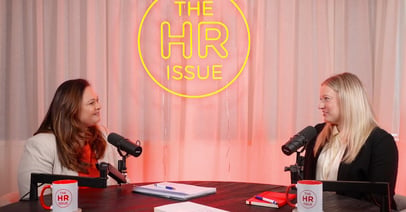
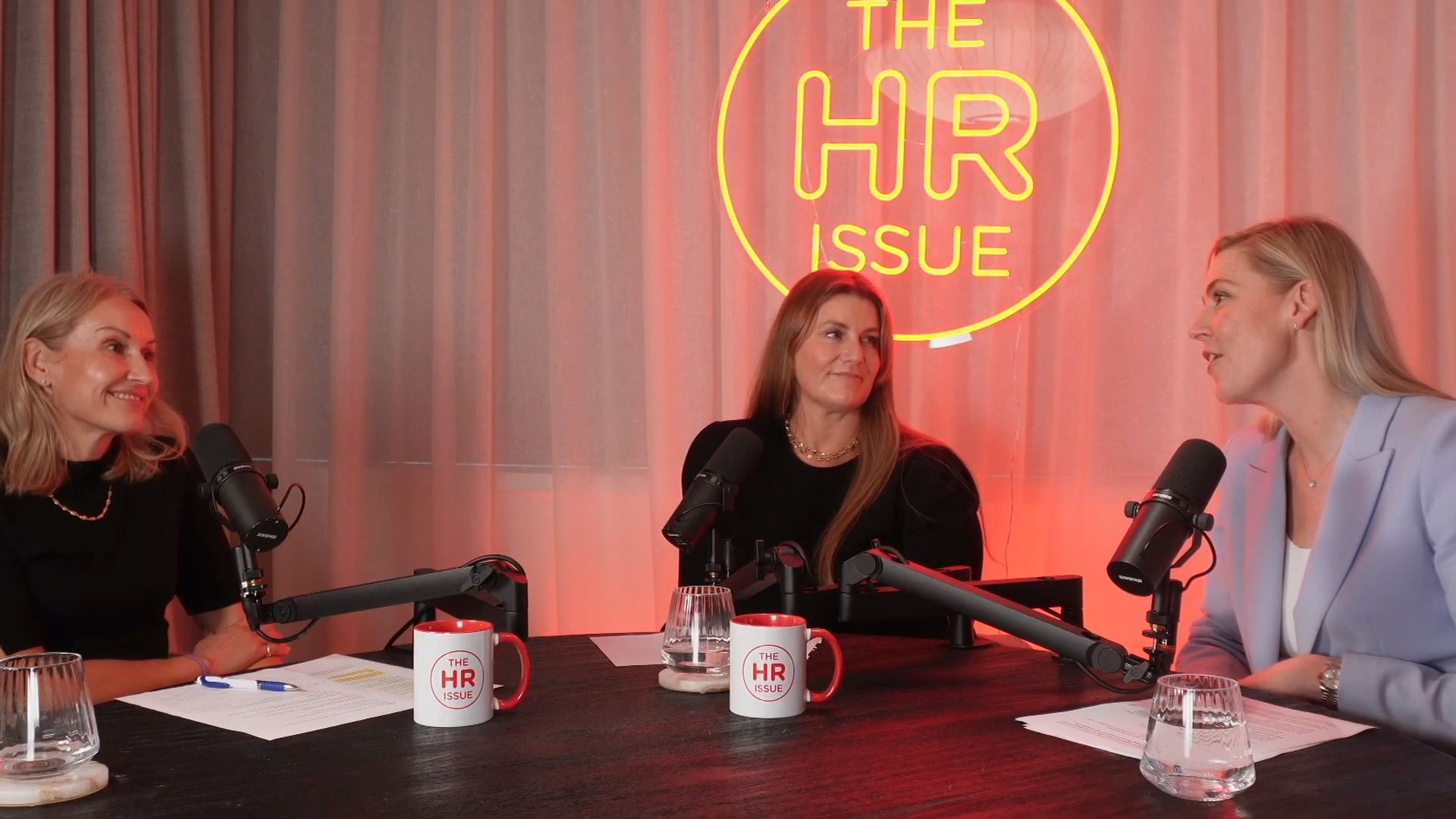
In our latest episode of The HR Issue podcast, host Kylie Terrell sat down with Claire de Carteret, Managing Director APAC at Gallup, and Kylie Green, Managing Director APAC at Reward Gateway | Edenred, to unpack what’s really happening inside workplaces across Australia, New Zealand, and beyond. Their verdict was clear: engagement is under pressure, leaders may not fully realise how wide the gap has become, and the biggest lever organisations can pull is manager capability.
This wasn’t a conversation about gimmicks or grand culture statements. It was a grounded, practical reminder that employee experience is shaped in the smallest moments, in the weekly check-in, the recognition that comes at the right time, the manager who knows how to ask a better question, and the leader who creates clarity in a world of change.
The engagement problem is real and so is the perception gap
Gallup’s State of the Global Workplace 2026 paints a sobering picture. As Claire de Carteret explained, “Only 20% of global workers are engaged at work.” In Australia and New Zealand, the figure is only marginally better: “only 21% of our working population are engaged at work.”
That alone would be enough to make engagement a priority. But the more troubling finding may be that many leaders still believe things are improving.
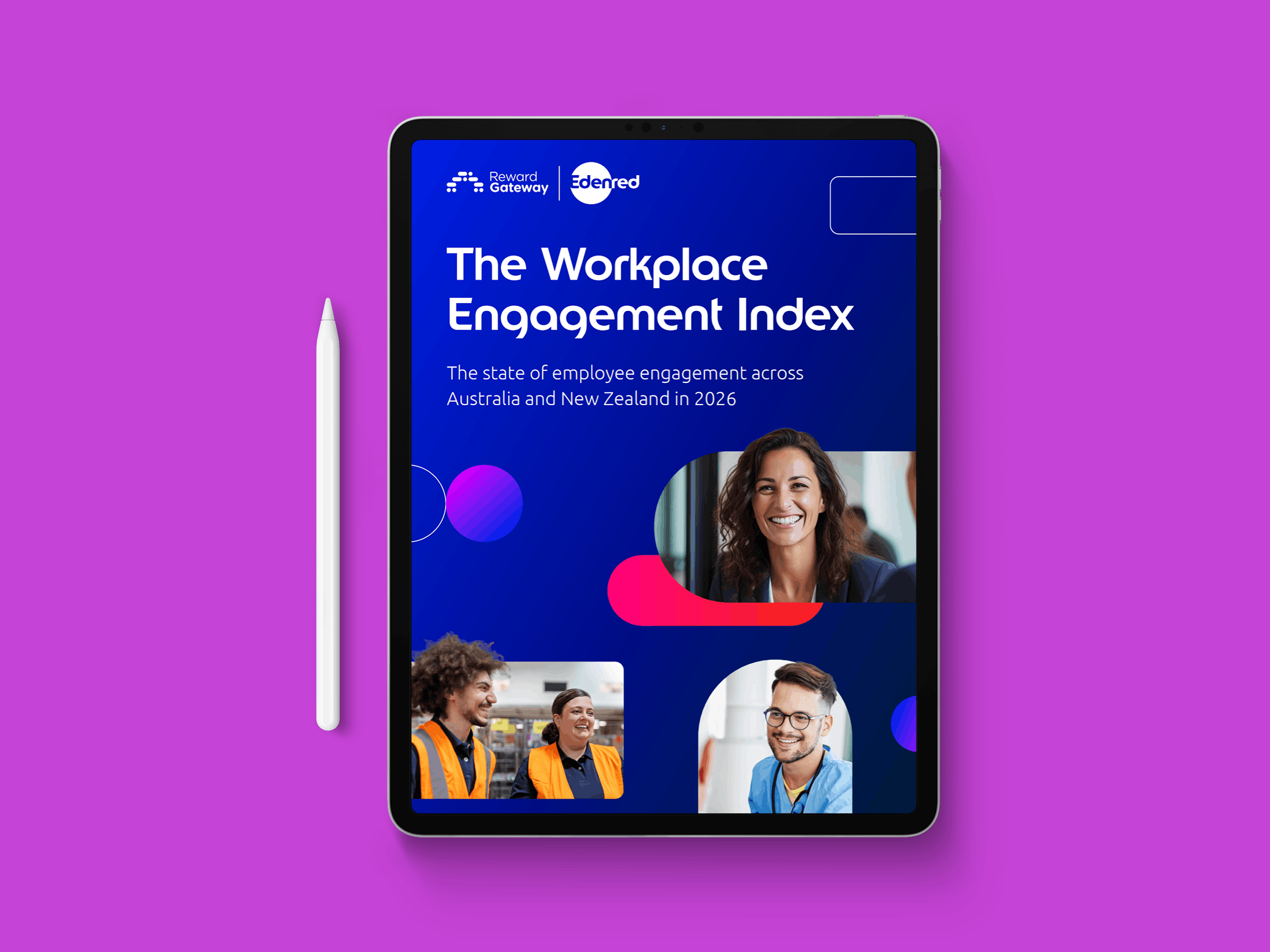
Kylie Green shared that Reward Gateway | Edenred’s Workplace Engagement Index found “a significant gap, about a 25% basis points gap between leaders’ perception and employees.” In other words, leaders often think engagement is rising while employees are having a very different experience.
“It’s not a lack of care, but a lack of visibility that leaders have across the broad range of experiences that they have to manage."
That distinction matters. Most leaders are not wilfully ignoring disengagement. But if they are relying on lagging indicators, outdated assumptions, or a narrow view of workforce experience, they may be diagnosing the wrong problem... or finding out too late.
The manager is still the biggest variable
If there was one message that came through loudest in the episode, it was this: managers matter more than ever.
Claire pointed to Gallup’s finding that “70% of the variation in employee experience can be determined by the local manager.” That means two teams in the same organisation, under the same strategy, with the same benefits and systems, can have completely different experiences of work simply because they have different managers.
It's one of the clearest explanations for why engagement efforts so often feel uneven. Culture is not only set from the top; it is translated locally, every day, by the manager leading the team.
And right now, that layer of leadership is under strain. Claire noted that the sharpest decline in engagement is being seen among people managers, while manager stress in Australia is among the highest in the world. Kylie Green echoed that reality, describing just how much organisations are now asking of managers:
“We’re asking them to lead strategy. We’re asking them to lead people management. We’re asking them to lead risk. We’re asking them to lead technology evolution, it’s a lot of hats to wear.”
That pressure is especially acute for first-time managers, many of whom have stepped into leadership during a period of economic uncertainty, geopolitical instability, and rapid technological disruption. They are being asked to lead human teams and increasingly agentic workforces, often without a clear playbook.
One meaningful conversation a week can change everything
For all the complexity surrounding engagement, one of the most compelling insights from the discussion was also one of the simplest.
Claire shared that Gallup studied two million teams to understand what set high-performing, highly connected teams apart from average or low-performing ones. The result? “The difference is the frequency of conversations.” Gallup landed on a deceptively simple formula: “one meaningful conversation a week.” That doesn't have to mean an hour-long, formal one-on-one. As Claire explained:
“A one minute intentional conversation — how are you? How’s your job? And what do you need from me? — can be just as boosting and net positive as a more comprehensive sit-down development conversation.”
Not performative concern, but real connection. Not a survey once a year, but regular moments of clarity, care, and accountability.
Kylie made a similar point from the employee experience lens: “Where our culture comes to life is in everyday conversations.” That is where trust is built, where recognition lands, and where employees decide whether they feel seen or invisible.
Recognition is still undervalued, and often too vague
If meaningful conversations are one pillar of engagement, recognition is another. Yet it remains one of the most consistently underdelivered parts of the employee experience.
Claire said the research is unequivocal: recognition needs to be timely and frequent. On high-performing teams, employees felt recognised “on a weekly basis,” not annually and not only during formal reviews.
Just as important, recognition needs to be personal. “It’s definitely not a one-size-fits-all,” Claire said. For some employees, recognition means public celebration. For others, it's a quiet word of thanks.
The key, she suggested, is simply to ask: “How do you like to be recognised when you do a great job?”
Kylie added another important layer: specificity. It's not enough for leaders to say thank you and move on.
Employees need to understand what they did, why it mattered, and what impact it had. “What gets recognised gets repeated,” she said.
Done well, recognition does more than boost morale. It reinforces values, builds belonging, and helps people connect their day-to-day work to a bigger purpose.
In the age of AI, human leadership becomes more important, not less
The discussion also tackled the question on every leader’s mind: what does AI mean for engagement and leadership?
Far from reducing the need for strong people management, both Claire and Kylie state that AI makes it more important. Claire put it plainly: “We need to make the shift from being a boss to being a coach.”
Kylie agreed, stating that AI will eventually free managers from some manual work, making “things that are uniquely human, like curiosity, inspiration, connection, trust… more important than ever before.”
That puts HR in a pivotal position. The organisations that thrive won’t just be the ones adopting AI fastest. They will be the ones helping managers lead through it well.
Stay tuned for the next episode and catch up with previous episodes below!
.png?width=600&height=300&name=2026_HR%20Issue_AU%20-%20Digi%20assets_Hubspot%20eDM%20banner%201%20(1).png)