How to protect employee engagement during mergers and acquisitions


If you've ever led people through a merger or acquisition, you already know the stakes: uncertainty climbs, priorities shift, and productivity often dips just when you need everyone focused. Protecting employee engagement during mergers is hard in any era, but today’s cost-of-living pressures make it even tougher.
Financial anxiety amplifies the stress of organisational change, and it erodes the cognitive bandwidth people need to do their best work. The good news is that you can counteract a lot of this turbulence with clear communication, focused priorities, and a deliberate strategy for benefits, rewards, and recognition that keeps people seen, supported, and moving in the same direction.
Why engagement and productivity dip during mergers and acquisitions
Mergers and acquisitions disrupt the two things that fuel performance: clarity and belonging. When people don’t know what will change or when, they naturally conserve energy and avoid risks. Decisions take longer; innovation slows; attention drifts toward rumour management instead of customer outcomes.
At the same time, identity takes a hit. A familiar brand, a team’s rituals, and the usual ways of working can all feel up in the air, which makes discretionary effort harder to summon. There’s also the practical friction of integration itself; duplicate systems, extra status meetings, and new processes that temporarily increase workload and reduce focus time.
Managers become the first line of defence for questions they can’t always answer, and perceived inequities between legacy organisations (from pay bands to perks) can erode trust quickly.
Cost-of-living pressures raise the stakes of mergers
Layer financial stress onto this picture, and the risk to engagement intensifies. When people are worried about bills, any hint of job or pay uncertainty feels existential.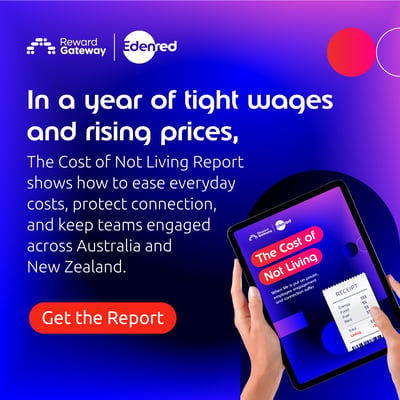
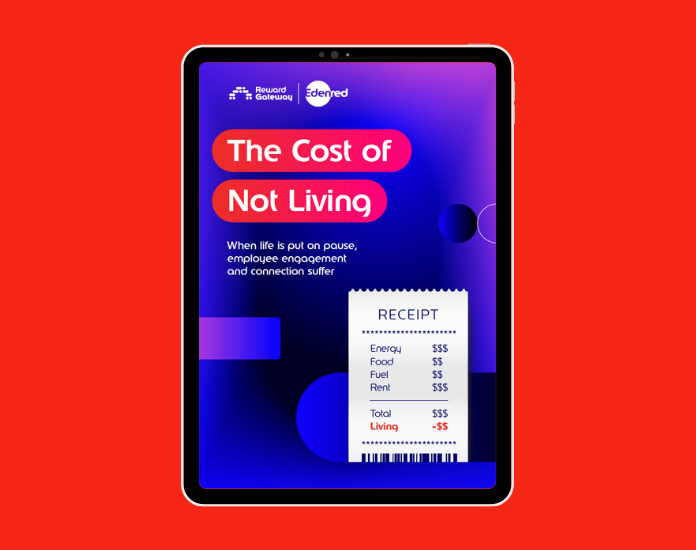
Our latest research report, The Cost of Not Living Report, can help you quantify the impact and build a compelling case for action, with exclusive findings and actionable tips.
According to our report, 61% of Australian employees and 64% of New Zealand employees state that financial stress has impacted their productivity in the last six months.
The report also indicates that over one in three Australian and New Zealand employees say they feel less engaged at work due to cost-of-living pressures.
These data points underscore a simple truth: financial anxiety compounds change anxiety. To protect employee engagement during mergers, you must address both.
Why rewards and recognition are your M&A stabilisers
Recognition is often dismissed as a “nice to have,” but during upheaval it functions as a performance system. Frequent, specific appreciation gives people certainty that their contributions still matter, status that their work is visible, and belonging in a shifting culture. It also signals fairness when it’s distributed consistently across legacy organisations.
Monetary rewards also play a role, especially when cost-of-living pressures are high, but the cadence and clarity of recognition often matter more than the size. A timely, specific thank-you tied to outcomes can do more to sustain momentum than a large but delayed award that arrives after the moment has passed.
Make recognition frequent, specific, and inclusive. Aim for short feedback loops: acknowledge progress within days, not weeks. Name the behaviour, the impact, and the link to integration goals. For example, “you consolidated our support queues and reduced duplicate tickets by 30%, which accelerates Day 1 readiness.” Don’t let recognition bottleneck with overextended managers. Peer-to-peer appreciation multiplies coverage and builds horizontal bonds between legacy teams, which is exactly what your new, merged organisation needs.
Bridge recognition systems quickly so everyone can participate from day one. If your platforms aren’t integrated, create a lightweight bridge; shared forms, a consolidated budget, and weekly leader spotlights; so employees from both companies can recognise each other immediately. Harmonise “recognition currencies” over the first 30–60 days and preserve people’s recognition histories to honour what came before. Then, audit distribution monthly to catch and correct any imbalances by level, function, location, or legacy company.
Tie recognition to the new story. Use a small set of shared values and clear integration outcomes; like customer continuity, on-time cutovers, reduced cycle times, zero missed payrolls; as the north star for recognition. Spotlight cross-company collaboration publicly to build a new sense of “us,” and make sure the invisible work that makes integration possible, like back-office operations, enablement, mentoring, and onboarding is recognised alongside the more high-profile wins.
Support financial wellbeing to calm change anxiety during mergers
Recognition works best when it sits alongside transparent compensation communication and practical financial supports. Publish your pay philosophy and the timeline for harmonising compensation so people understand what will change and when. If a pay freeze is necessary, time-box it and explain the why.
Consider targeted cost-of-living supports where pressure is most acute; one-off cost-of-living payments, temporary travel or meal stipends during office transitions, discounts on everyday essential costs, or inflation-adjusted allowances in critical markets.
Expand financial wellbeing resources: benefits navigation, access to financial coaching, and a stigma-free hardship fund with clear criteria can reduce day-to-day stress and free up attention for the work of integration. Equip managers with talk tracks and escalation paths so they can listen empathetically without making commitments they can’t keep.
Avoid the common pitfalls of mergers and acquisitions
Two missteps can undermine even the best-intentioned programs: pausing recognition “until after the merge,” and rewarding only the highly visible integration work. The period of greatest uncertainty is precisely when people need to feel seen, and the quiet, foundational efforts are the bedrock of a successful merger. Beyond these, several other pitfalls regularly erode employee engagement during mergers, and each has a practical way forward:
Pausing recognition at the exact moment people need it most
Recognition is often the first thing leaders defer when budgets tighten or attention shifts to integration tasks. That pause signals that contributions aren’t a priority, just as anxiety peaks. Keep recognition flowing during the transition, even if you scale awards modestly. Timely, specific appreciation stabilises focus and reinforces what matters right now.
Rewarding only what’s visible
Integration “war rooms” and flagship projects naturally get airtime, while back-office work that protects customers or compliance gets overlooked. This skews motivation and breeds resentment. Balance the spotlight by intentionally recognising behind-the-scenes efforts and explicitly tying them to outcomes.
Inconsistent recognition across legacy organisations
If one legacy company receives more awards or praise than the other, people read it as favouritism, which erodes belonging. Harmonise criteria early, give both sides equal access to the same tools and budgets, and review distribution monthly to spot and correct imbalances by function, level, location, and legacy org.
Ignoring frontline access and time poverty
Part-time, shift-based, or frontline employees often can’t access platforms on a desktop or attend live town halls. If they’re excluded, engagement drops fastest where customer impact is highest. Ensure your recognition and communications are mobile-first, quick to use, and available asynchronously. Supplement digital channels with printed spotlights or manager shout-outs in pre-shift huddles.
Communicating without closure
Vague updates that never circle back create rumour mills and sap productivity. Close loops explicitly: “Here’s what we decided, why, and what happens next.” When plans change, say so and reset expectations. Recognition then reinforces progress within a clear narrative.
Manager overload and skill gaps
Managers carry the emotional load of mergers and acquisitions, and without support, recognition becomes sporadic or generic. Give managers talk tracks, examples of great recognition, and lightweight prompts (e.g. “Who helped you hit this week’s milestone?”). Make it easy to send quality appreciation in under two minutes.
One-size-fits-all rewards and tone-deaf perks
Office-centric rewards won’t land with field teams, and generic eCards won’t resonate with engineers shipping a risky cutover at midnight. Calibrate rewards to roles and realities: recovery time after crunch periods, safety-focused recognition for frontline staff, or development opportunities where promotion timelines are extended.
How EG Australia united and engaged its workforce after a merger and acquisition
A powerful example of protecting employee engagement during mergers comes from EG Australia, part of the global EG Group with more than 6,000 fuel, convenience, and food service sites worldwide. In 2019, EG Australia acquired the Woolworths Fuel and Convenience Business and inherited a dispersed workforce of 4,500 people across more than 540 sites. The transition took years and, as is common during mergers and acquisitions, many employees felt disconnected from the new employer and uncertain about what the change meant for them. Concerns were heightened by the possibility of losing the exclusive employee discounts they relied on, and by the onset of the COVID-19 pandemic, which slowed travel, disrupted operations, and left people feeling isolated.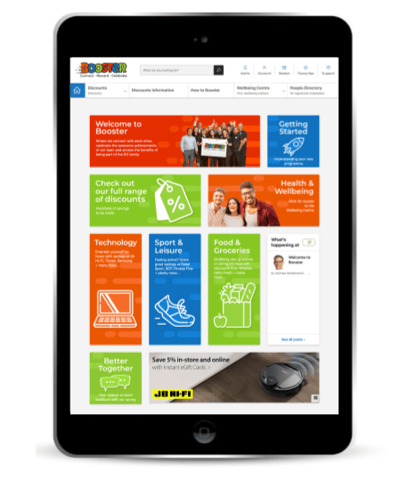
EG Australia’s leaders knew they had to create clarity, belonging, and practical support quickly. Chief People Officer Peter Fotheringham and his team launched a “top-down, bottom-up” process of workshops across the country to define a new cultural backbone: the values and behaviors called “The Way We Work Together.” They intentionally adopted a more casual, people-first brand to signal a clean break from the previous corporate feel. As Peter put it, they wanted something that showed the business was different and focused on the team and the customer and it resonated with frontline employees.
To bring the values to life and meet employees’ financial and connection needs, EG Australia partnered with Reward Gateway | Edenred to design and launch an employee engagement platform called Booster. With bright, approachable branding that featured employees themselves, Booster became the central place to access existing and expanded employee discounts, catch up on company news, and stay connected to leadership. Recognition arrived next: peer-to-peer eCards and manager-led monetary awards gave teams a simple, timely way to appreciate one another’s contributions. A Wellbeing Centre rounded out the experience with resources for physical, nutritional, financial, and mental health.
Crucially, EG Australia treated Booster as both a communication engine and a cultural amplifier. CEO Mike McMenamin and the People Team kept content fresh with seasonal updates and a monthly “Mike on the Mic” newsletter that included short, smartphone-shot videos. They even printed the newsletter to ensure part-time and casual workers could engage in the way that suited them. That consistent cadence gave people certainty and connection at a time when both were in short supply.
The outcomes speak directly to how savvy businesses can overcome the challenges of employee engagement during mergers. Today, 91% of EG Australia’s workforce actively uses Booster, an exceptional adoption rate for a predominantly remote and part-time population. Since launch, employees have saved more than $530,000 through the benefits hub, helping to offset cost-of-living pressures when they mattered most.
Teams have sent over 27,000 peer-to-peer eCards, creating a visible stream of recognition that reinforces desired behaviours and cross-company collaboration. The company has also distributed more than 12,000 monetary awards totalling over half a million dollars, putting meaningful financial support into the pockets of hardworking Australians nationwide. In short, EG Australia translated values into daily action, blended recognition with practical financial help, and used consistent communication to build trust across a newly combined organisation.
Bringing it all together
Protecting employee engagement during mergers is about creating islands of certainty and fairness amid change. Rewards and recognition are uniquely powerful because they meet human needs while accelerating business outcomes. Pair them with transparent pay communication and targeted financial supports and you’ll maintain momentum without burning out your people or losing your best talent.
Want to learn more about motivating people during times of uncertainty and change? Access our research report: Adaptability in a Changing World: How Recognition and Rewards Empower Employees to Embrace Change.
If you'd like to speak to a member of our team about how to protect employee engagement and power productivity during times of change, reach out now.