Joy is a business strategy... and the numbers prove it


Joy at work sounds like a ping pong table and a fruit bowl in the corner of the office. It isn't.
The lack of it is one of the reasons 56% of your employees are quietly considering leaving, and the reason the rest are still here. It's the variable that decides whether your people give you their best work or just their compliance.
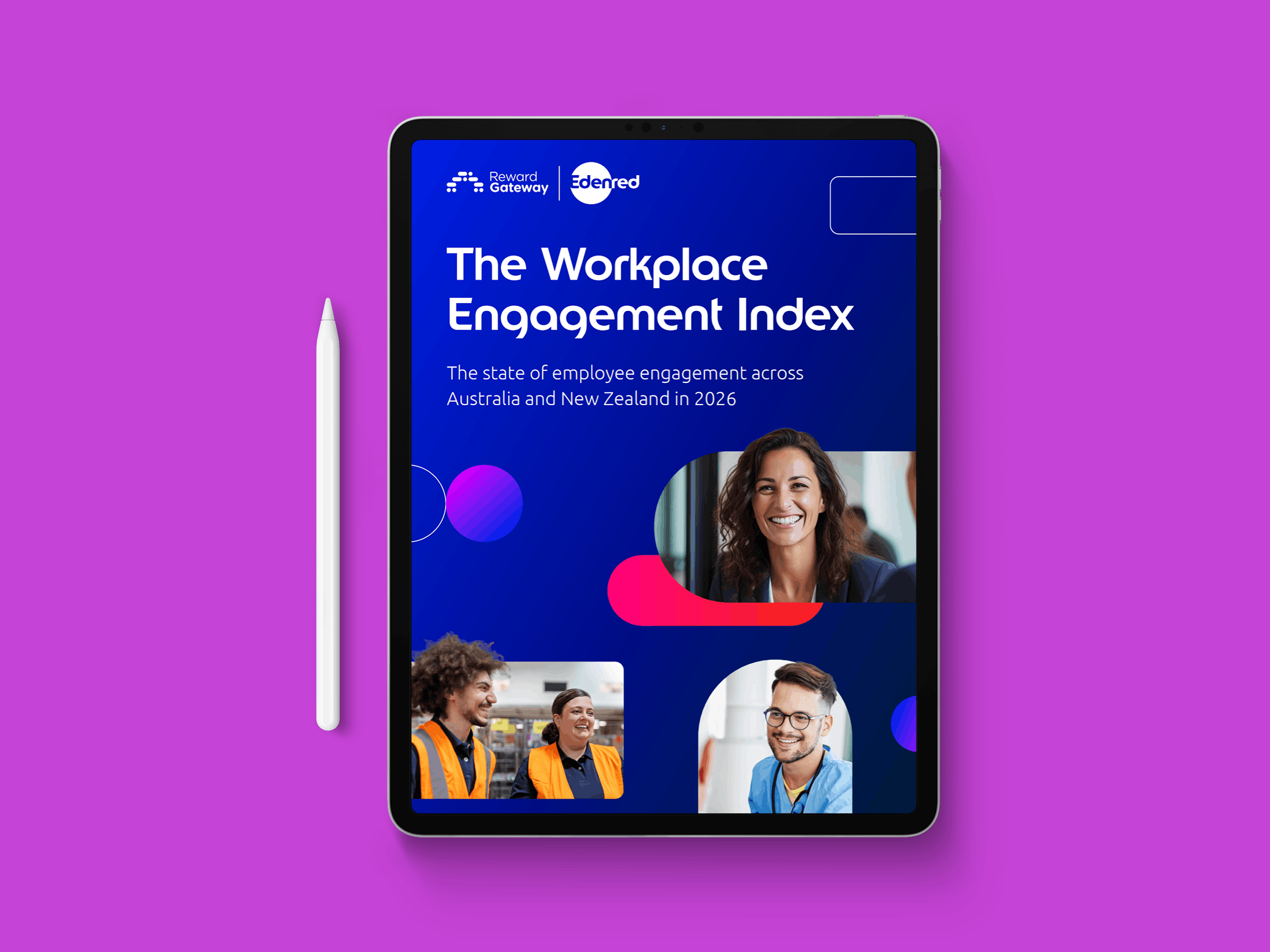
And according to Reward Gateway | Edenred's 2026 Workplace Engagement Index, it's one of the biggest disengagement drivers in Australian and New Zealand workplaces.
The teams that win on retention and engagement are the ones who have stopped treating joy as a soft outcome and started treating it as a deliberate, measurable part of how they run the business.
Here is what the data says, and what your employer brand and EVP function should be doing about it.
The numbers in this piece come from Reward Gateway's 2026 Workplace Engagement Index. The full report has more in it than I can fit here, and it's worth reading.
Your leaders think engagement is fine, your people aren't sure how to tell you it isn't
This is the stat that should keep every CHRO up at night; 46% of decision-makers believe engagement has gone up this year but only 25% of employees agree.
Half of all employees report no change at all, and another 25% feel actively less engaged.
That gap is a listening problem dressed up as a comms problem.
I see it constantly. Leadership teams sit in offsites and tell each other engagement is improving because the all-staff meetings have better Q&A and the latest pulse survey ticked up two points. Meanwhile the actual employees are updating their LinkedIns on Sunday nights.
If your EVP work begins by validating what leadership already believes, you have not done EVP work. You have done a marketing exercise. The first job of the function is to surface the truth, and the truth is almost always less flattering than the leadership narrative.
Joy is the variable everyone is feeling and no one is measuring
Interestingly, 47% of employees cite lack of joy as the reason they are less engaged. Among deskless and frontline workers, that figure jumps to 76%. Joy ranks above stress (40%) and cost-of-living pressures (36%) as a disengagement driver. This means the biggest reason your people are checked out is not money. It's the absence of joy.
 Joy at work is what happens when someone feels seen. When their work matters. When they are recognised by name, not by department. When their manager actually knows what they did last week. When the place they spend a third of their adult life feels like somewhere they belong.
Most organisations we work with have far more joy in them than they are telling stories about. The problem is rarely that it doesn't exist.
The problem is that nobody is amplifying it, celebrating it, or building the systems to make more of it. That is an activation gap, and it sits squarely with your employer brand function.
WATCH THE FIRESIDE CHAT: Joy on the Frontline: Building Belonging in Purpose-Led Work
You cannot recruit your way out of a retention problem
The research also found that 56% of employees have considered leaving in the past six months. That figure was 58% in 2025 and 56% in 2024. It's not moving. Frontline workers are the worst affected, with 32% feeling less engaged.
Yet most organisations respond to a retention crisis by spending more on recruitment. I have lost count of the conversations that go like this: "We need to refresh our careers site." Why? "Our turnover is up." Right, but how is your internal EVP activation? "Our what?"
The best recruitment campaign is a workplace people don't want to leave.
Internal EVP activation, reminding your existing people why they chose you, telling their stories, reconnecting them to purpose, is the cheapest and most underused retention lever in your business. It's also sitting right there.
Recognition is the most underused performance lever in your business
A whopping 49% of Australian and New Zealand employees say recognition and rewards make them feel more productive. That is the number one productivity driver in the data, two years running.
Overall productivity is climbing too: 61% of employees frequently feel productive, up from 47% last year. When the conditions are right, performance follows.
Most people file recognition under HR. It belongs equally with employer brand. The function in your business that knows your people's stories, their wins, their growth moments, is your employer brand function.
They are sitting on a goldmine of recognition content, and most of them have not been given the mandate or the budget to do anything meaningful with it.
To build a culture of recognition you need three things. The will. The systems. The stories. Most organisations have the will. Almost none have all three.
There is no such thing as a one-size-fits-all EVP
Gen Z is the most engaged cohort in the data, with 38% feeling more engaged this year. Older Millennials and Baby Boomers? 17-18%. Frontline and deskless workers are chronically underserved by employer brand strategies designed around desk-based audiences.
If your EVP is the same message to everyone, it's the right message for nobody.
The best EVPs are layered. There is one clear promise at the centre, and then there is segmented activation that speaks to what actually matters for each cohort. A 23-year-old in their first professional role and a 54-year-old senior manager are not engaged by the same things, and pretending otherwise is why so much EVP communication washes over people without landing.
So, what does this mean for you on Monday morning?
Joy at work is a commercial outcome. It shows up in your retention numbers, your productivity numbers, your employer brand reputation, and your ability to attract the next generation of talent.
Your EVP and employer brand function knows where the joy is. They know the stories. They know what your people actually value. The question is whether they have the mandate, the budget, and the tools to do something with it.
That last word matters. You cannot wish a culture of recognition and joy into existence. You have to build it deliberately. That means platforms that make it easy for managers to recognise their people, easy for employees to celebrate each other, and easy for the organisation to see what is actually happening across all of it.
That is why a platform like Reward Gateway | Edenred matters. If you care about engagement, retention, and joy, you need the tools to systemise it. Hope is not a strategy. Annual surveys are not enough. Cultural change happens when you make it easy, consistent, and visible, every day and for everyone.
Sean Withford is co-founder of It's The People, an employer brand and EVP consultancy based in Sydney. He has led EVP development for over 100 organisations across his career. www.itsthepeople.com.au
To learn more about our Employee Engagement Platform and how it can supercharge engagement, productivity, and retention in your organisation, schedule a free consultation with one of our experts.