








Key findings from our Bridging the ROI Gap Report
Explore the pivotal HR trends that will redefine employee engagement and drive business performance in 2026.

From tighter budgets and heightened scrutiny to the upcoming Employment Rights Bill and AI's transformation of the workplace, HR leaders are navigating an unprecedented level of change. They're expected to deliver an employee experience that boosts culture, productivity and retention, at the same time as taking on a more strategic role in shaping organisational outcomes.
But as businesses face mounting pressure to demonstrate the value of every initiative, it's crucial that HR leaders are able to prove the ROI of people‑focused strategies. From employee wellbeing programmes to skills development and DEIB initiatives, the ability to link these efforts to measurable outcomes such as productivity, retention, performance and overall business value is now essential.
As such, we've conducted research into this increased demand for ROI, surveying 2,003 employees and 1,000 HR managers across the UK. Our latest report, Bridging the ROI Gap, serves to highlight how data‑led insights and emerging people metrics can empower HR managers to influence boardroom decisions, drive productivity and prepare their organisations for success in 2026 and beyond.
You can unlock crucial insights from our study by downloading the full Bridging the ROI Gap report, while we've also picked out some of the key points to digest below:
There is an unhappiness epidemic in the UK workplace
Mapping, understanding and quantifying the emotional experience of a workforce has become increasingly important to businesses across the UK. And, quite rightly, its importance is no longer confined to the People and Talent teams. It's therefore up to HR to explore new metrics that incorporate traditionally-less tracked sentiments around employee motivation, collaboration, trust and, crucially, happiness. Ultimately, it's these, historically overlooked factors, that can fundamentally shape business performance and valuation.
But one of the most alarming trends uncovered by our report, and one that HR professionals must address urgently, is that when looking at these new metrics, only 51% of employees frequently feel happy at work.
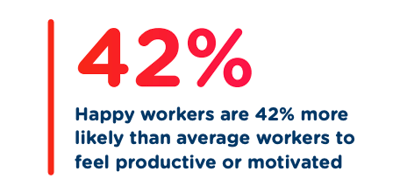 It's clear from our findings that employee happiness is not just a fluffy metric either; it is a critical business driver, as when we delve deeper into the data, it appears that those who report regular feelings of happiness score high in feelings of trust, connection and engagement than their "unhappy" counterparts.
As HR managers, understanding and mitigating this unhappiness is crucial for maintaining a motivated and engaged workforce - in turn, driving business performance. However, there's a considerable amount of work to be done with only 30% of HR teams currently tracking happiness within their organisations.
An inability to prove ROI is fuelling budget cuts across HR teams
Budget cuts have become a harsh reality for many HR departments, with 67% of our survey respondents having experienced reductions in the past year. But what's arguably more concerning is that HR teams who struggle to prove ROI have had their budgets cut by twice as much.
The ability to measure and prove ROI has evolved over recent years from a defensive tactic to a strategic necessity. As a result, HR managers need to leverage data more effectively in order to point to the impact of their programmes on key business outcomes such as productivity, retention and financial performance.
By linking new metrics, such as employee happiness, to business results, HR can make a significantly more compelling case for investment in people-centric initiatives. This approach will not only help in retaining investment for existing initiatives but will also transform budget conversations, enabling HR to make a stronger business case for new strategies.
HR have an opportunity to become AI-pioneers
Large or small, the reality is that AI is in the process of reshaping the way HR works; whether it’s the way employee benefit platforms operate, how administrative tasks are carried out or even how employees are upskilled. But in light of such a quick transformation, it's clear that workplace culture and policies are having to catch up.
Our research revealed that while 73% of HR managers are providing AI training, only 21% of employees reported that they have received it. This disconnect highlights the crucial role HR must play in facilitating AI adoption and ensuring that employees are adequately trained to use AI tools effectively.
As businesses look to harness its potential as a springboard for growth and innovation, HR managers have the opportunity to embrace a role championing AI. Through policy development, upskilling employees, addressing employee concerns and exploring the possibility of ‘human quotas’ for the workforce, HR will be key to ensuring that AI becomes a tool for growth rather than a source of anxiety.
Decentralised HR is under pressure from a resource gap and a management-averse workforce
As HR are expected to take on greater strategic importance, there is the challenge of balancing complex responsibilities with limited capacity. One solution that's been explored for a while now is that of decentralising certain HR tasks to line managers, freeing HR to focus on more strategic priorities.
But, with our research revealing a gap between how HR feel they are equipping their leaders and how supported employees feel by their line managers, the question remains: how can this shift be implemented effectively?
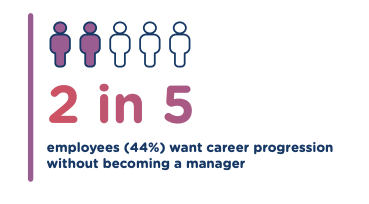
At the same time, with 44% of employees wanting to progress in their career without becoming a manager, HR need to cast one eye towards the not so distant future and repositioning the role of manager in the current workforce. Success will depend on equipping managers with the right tools and support, while also making managerial roles more appealing, ensuring they can champion people initiatives and drive meaningful engagement across the organisation.
Download the full report to discover more insights surrounding these key trends, as well as guidance on how to navigate their complexity and create a work environment that fosters engagement, productivity and business growth in 2026 and beyond.